
🚨 I’ll be live at 10 a.m. ET with Nate Tucci🚨
We’ll cover earnings opportunities, a long-term play on Microsoft, how to do credit spread math, an update on Overnight Options and more [tap to join us for Opening Playbook]
I recently came across something that’s been in the institutional playbook for years — and honestly, I’m surprised more traders don’t talk about it.
It’s called investment-grade credit spreads, and it measures how much risk institutions are willing to take in the debt markets. Think of it as a behind-the-scenes look at whether the big money is comfortable lending — or quietly stepping back.
Right now, that spread’s sitting at a healthy level, which tells me institutions are confident, risk is on and the market has room to breathe.
What really makes this indicator stand out is how reliable it’s been over time. It’s flagged every major risk-off environment since the data began, giving traders a clean read on when trouble might be starting to build under the surface.
How the Three-Zone System Works
The beauty of this metric is its simplicity. Credit spreads fall into three clear zones that line up almost perfectly with how institutions feel about risk.
When spreads drop below 100 basis points — roughly 1% — you’re in the green zone. It’s the classic risk-on environment where institutions feel comfortable lending and confidence is high.
Between 100 and 125 basis points, you move into the yellow zone. It’s a middle ground where things can get choppy. Institutions aren’t panicking but they’re not leaning in aggressively either.
Then there’s the red zone above 125 basis points. When spreads break into this territory, institutions are basically saying they’re worried. They start demanding higher premiums because they see higher chances of defaults or broader credit stress.
And here’s the part that always gets my attention: Every time this indicator entered the red zone, a major downturn either followed or was already underway. The 2008 crisis, the 2011 debt scare and the 2020 crash all saw spreads spike into red territory before markets really unraveled.
Why This Matters More Than You Think
Right now we’re firmly in the green zone. Institutions are lending, risk appetite is healthy and there’s no sign of a credit crunch forming under the surface. That doesn’t mean you get reckless, but it does mean the broader backdrop is supportive for trend-following, momentum and growth-heavy strategies.
This indicator isn’t meant to predict market moves months in advance. It’s more of a weekly pulse check — something I’m adding alongside tools like the CBOE Put/Call Ratio and market breadth. It gives a clean read on institutional confidence, and when that confidence shifts, it usually matters.
If you’re not tracking this yet, it’s worth adding to your routine. It won’t light up often, but when it does, you’ll want to pay attention.
Graham Lindman
Graham Lindman Trading
Follow along and join the conversation for real-time analysis, trade ideas, market insights and more!
- Telegram:https://t.me/+abM5RWRJKrpkNWI5
- YouTube:https://www.youtube.com/@NewMoneyCrew
Important Note: No one from the ProsperityPub team or Graham Lindman Trading will ever contact you directly on Telegram.
*This is for informational and educational purposes only. There is inherent risk in trading, so trade at your own risk.
P.S. When the Top Minds on Wall Street Support a Market Phenomenon…
When many top minds on Wall Street and in finance all agree that one market phenomenon is the most important factor to consider before placing a single trade…
You know it’s big business!
Whether a stock is soaring or sinking, this particular phenomenon I’m talking about is in control.
And by tapping into this same phenomenon…
I’ve been able to go after opportunities with 86.7% accuracy.
That’s like winning almost nine out of every 10 trades.
Like last September, when the media was pushing fear narratives about the “September effect” that never struck the market.
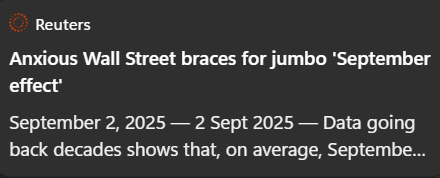
You could have tapped this phenomenon and gotten cool opportunities on popular tickers like TSLA, NVDA, GOOGL and more.

Sure, there were smaller wins and those that didn’t work.
But I’m going to share the next BIG entry flashing right now
If you’d like to get the details and the next opportunity…
Follow this link for the entire story.
We develop tools and strategies to the best of our ability, but no one can guarantee the future. Past Performance is not indicative of future results. What you will see today are some of the best examples of the underlying method that is now automated inside the “Income Dashboard.” From picks 3/19/25 through 1/29/26, the win rate was 86.7% with a 39% average winner and 24% average net return of winners and losers over a 19-day average hold time.