🚨 I’ll be live at 10 a.m. ET with Graham Lindman🚨
We’ll cover what happens when we hit all-time highs, if the market’s shrugging off bad news, earnings are picking up and more — what are the biggest surprises waiting? [tap to join us for Opening Playbook]
Something unusual happened recently that most traders probably didn’t even notice, but if you’re actively managing positions, this might be one of the best developments we’ve seen in a while.
The market just put together a run where 83% of stocks closed green in a single session, and over a three-day stretch, roughly 92% of stocks were up. That’s not just a good day — it’s exceptional breadth.
What makes this even more interesting is how quickly the Invesco S&P 500 Equal Weight ETF (RSP) has been gaining ground. It’s not only catching up to the S&P 500 (SPY) — there’s a real possibility it shows outsized potential as it pushes toward its all-time highs.
When an equal-weight index starts to accelerate like that, it tells you participation is expanding fast. And that expanding participation is exactly what makes this market so favorable for active traders.
Breadth: More Opportunity, Less Risk
When the market rallies on narrow leadership, you’re stuck trading the same handful of mega-cap tech names everyone else leans on. But right now, momentum is spilling into places we haven’t seen in a while, which opens the door to a much broader opportunity set.
You can trade financials, tech, industrials, healthcare names like Regeneron (REGN), and even quasi-defensive names like Walmart (WMT) — which may be a staple but doesn’t trade like one. This is what real sector diversification looks like when breadth expands, and it means if one group pauses, it doesn’t suffocate every position you have on.
This is also where two-way trade structures shine. Instead of committing to a single direction, you can define risk on both sides of a setup. Structuring a vertical on a name that’s running hot, then pairing it with the opposing vertical at levels that make sense, gives you flexibility whether momentum extends, cools, or chops sideways.
In markets like this, that flexibility matters.
Technically Overextended, Yet Still Tradable
It’s true — the market is stretched. Indicators say so, price says so, and anyone paying attention can feel it. But overextended doesn’t mean untradeable — it just means you need to be more calculated with how you participate.
This is where defined-risk spreads, two-way setups, and staggered entries come into play. You’re not trying to call a top or chase the last bit of upside — you’re building positions that can handle a pullback, continuation, or sideways digestion without blowing up your book.
When breadth is this strong and sectors are rotating, the market gives you multiple ways to stay involved. If tech pauses, financials can pick up the slack — if growth cools, industrials or healthcare can carry the move.
That’s the real shift happening right now. You’re no longer tethered to a handful of names hoping they keep working — you’ve got options across the board, and that changes how you trade entirely.
Now don’t forget to join us at 10 a.m. ET weekdays for Opening Playbook, and at 3:30 p.m. ET Closing Playbook!
Nate Tucci
Tucci Trades
Follow along and join the conversation for real-time analysis, trade ideas, market insights and more!
- Telegram: https://t.me/nate_tucci
- YouTube: https://www.youtube.com/@NewMoneyCrew
Important Note: No one from the New Money Crew team or Tucci Trades will ever contact you directly on Telegram.
*This is for informational and educational purposes only. There is inherent risk in trading, so trade at your own risk.
P.S. We’re Going After My 100th Trade — Killing a Bird With 2 Stones
I’ve been deploying a unique approach to the market for at least 15 months. One that allows me target cash whichever direction the market or the stock decides to go.
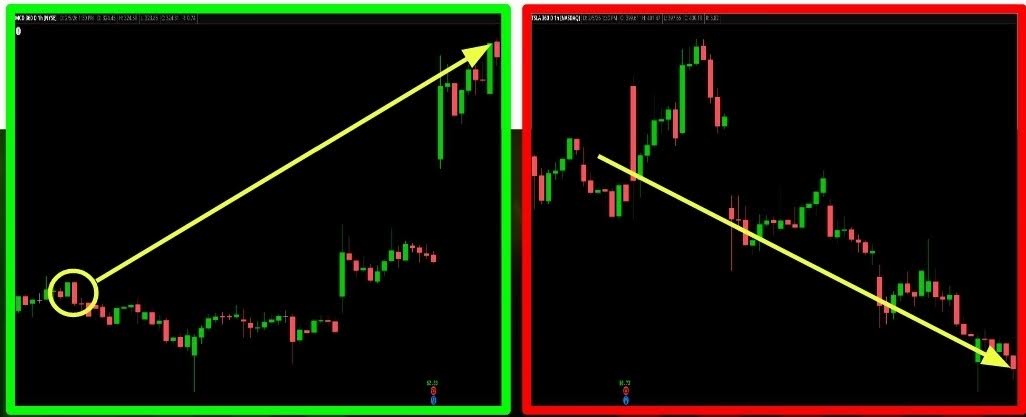
The next opportunity opening up right now is our 100th trade and I would like you to join in on the milestone with me.
Disclaimer: We develop tools and strategies to the best of our ability, but no one can guarantee the future. There is always a risk of loss when trading past performance is not indicative of future results. Since 1/12/24, the strategy has issued 99 closed trades, for a total win rate of 72.8%. The average gain, winners and losers included, has been 5.12% per trade over an average holding period of 20 days.