🚨 Join Alex and Geof live at 2:30p.m. ET🚨
It’s Friday, and we’re closing out the week with high-impact setups. Alex Reid is putting the Free Ride Scanner to work to identify weekend swing trades where institutional flow is surging. Plus, Geof Smith provides a deep dive into Gold and the potential impact of a weakening dollar [tap to join us for Profit Panel]
Let me share something that might change how you think about every Fed decision you’ve ever watched.
I was working through this framework recently, and it crystallized something I’ve been tracking for years: The Fed doesn’t actually control interest rates the way most people think.
They’re not the maestros conducting the orchestra — they’re chasing the two-year constant maturity rate, which is the two-year Treasury rate.
Here’s what that means in practical terms. The market sets the rate with the two-year Treasury, and the Fed just follows along. They hold it a little higher or a little lower, but generally they follow this rate closely.
When there’s a large discrepancy, they cut or they raise. When the market’s going higher and they’re behind, they raise rates. When they’re above and the market’s dropping away from them, they cut.
And you can actually see how reactive they are when they get unsure. Last year was a perfect example. They cut rates, then the market rate immediately popped above their move.
That spooked them, so they froze policy through July. When things started calming down, they tried cutting again — and the market immediately spiked through their new level. It was a full-on chase, not leadership.
So why does this matter right now? There’s currently no room to cut and no room to raise.
The Fed funds rate is sitting right on top of the two-year constant maturity rate. If you cut, you’re widening the spread between these two rates. If you raise, you’re doing the same thing in the opposite direction.
And here’s the part few will say out loud: It’s not about controlling inflation or jobs. The whole dance revolves around staying in line with the two-year. That’s the true anchor.
The Pattern That Predicts Crisis
Here’s where it gets interesting — and a bit unsettling.
Every time the Fed funds rate has crossed the two-year Treasury rate, we’ve had some kind of financial crisis.
I’ve watched this happen repeatedly since I’ve been trading. Each crossing marked a moment when the Fed fell out of step with the market, and each one lined up with major stress — rate freak-outs, flash crashes, and sudden liquidity events that came out of nowhere.
We saw it with the COVID flash crash. We saw it again during the tariff-driven sell-off — what I call the Liberation Day crash — where the market suffered a bigger top-to-bottom flush than COVID.
But that one is a fascinating exception: The panic never showed up in rates at all. It was contained, and the Fed managed to hold the line.
So while the crossing pattern is powerful, not every violent move in the market disrupts the interest-rate structure.
The difference is always in whether the two-year steps out of sync with the Fed. When it does, that’s when the real danger tends to surface.
What This Means For Your Trading
Right now, the market rate suggests they shouldn’t do anything. It’s not about controlling inflation or jobs — it’s about chasing the two-year constant maturity rate.
And right now, they’re in the ballpark.
But here’s my warning: The signs are here. This is setting up for a bigger flush than you might expect.
The Fed is still operating under the illusion of control while the two-year is quietly writing the script.
And the timing couldn’t be more delicate. We’re about to get a new Fed chair next month, followed by their first FOMC meeting in June.
Leadership transitions add uncertainty, and uncertainty layered on top of a fragile rate dynamic is something every trader should pay attention to.
If you want to understand where policy is actually headed, don’t obsess over speeches or press conferences.
Watch the two-year Treasury. That’s where the real story lives.
Jeffry Turnmire
Jeffry Turnmire Trading
I host my Morning Monster livestream at 9:15 a.m. ET each weekday on YouTube, and then 30 Minutes of Awesome at 5 p.m. ET each Tuesday!
Please check out my channel and hit that Subscribe button!
You can also follow along and join the conversation for real-time analysis, trade ideas, market insights and more!
- Telegram: https://t.me/+6TdDE7-F6GlhMmJh
Important Note: No one from the ProsperityPub team or Jeffry Turnmire Trading will ever message you directly on Telegram.
I’m just a regular dude in Knoxville, Tennessee: a husband, father, civil engineer, urban farmer, maker and trader.
I’ve been at this trading thing with real money for 20-plus years, and started paper trading over 35 years ago. I have a knack for making some epic predictions that just may very well come true. Why share them? Because I like helping other people — it’s the Eagle Scout in me.
*This is for informational and educational purposes only. There is inherent risk in trading, so trade at your own risk.
P.S. Everyone Panics… Then This Happens Next in the Market
Most of the “buy and hold” investors out there are practically living life on the edge.
They keep their eyes glued to the news and jump in and out of any stock that shows up on the headlines.
However, when investors run for the hills and panic sell, that’s usually a green light for the kind of opportunities we pursue daily.
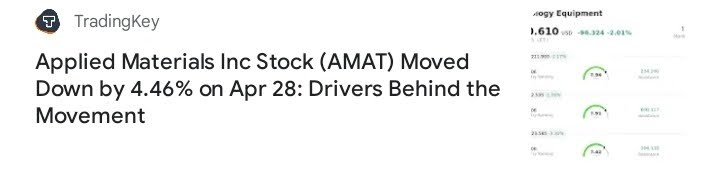
Take the recent dump of Applied Materials, for example, thanks to China tensions.
Or even Disney stock slumping on a falling theme park report.
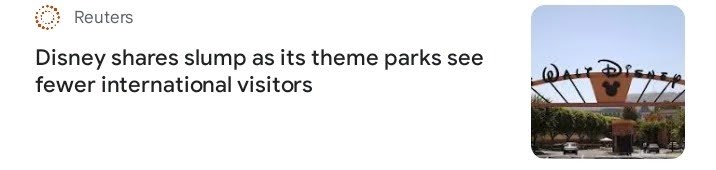
These “red flags” create the perfect setup for a 10-Minute Moonshot once the initial panic subsides and institutional buying begins.
And if you know how to look…
You can plug into these 10-Minute Moonshots and target a double, even triple-digit payout the same day before lunch.
Now, we can’t make trading guarantees here…
But Geof Smith would like to show you how to spot stocks that are in line for massive institutional buying at the open…
As well as how to tap into those transactions every single day.
Interested?
Get Started With the Details Right Here
Disclaimer: We develop tools and strategies to the best of our ability but no one can guarantee the future. The profits and performance shown are not typical to any one individual and you may lose money. The trades shown are from historical data in order to demonstrate the potential of the system..