🚨Opening Playbook is off today🚨
But join Graham and Roger at 10 a.m. ET as they reveal a brand-new daily income approach and walk through [tap to join them]
You know what’s funny about market narratives?
They’re almost always perfectly timed to trap the most people possible.
Right now, everyone’s talking about how the AI bubble has burst. Alphabet (GOOGL) earnings disappointed. The spending cycle is over. We’ve seen the top.
And honestly? That’s exactly why I think we’re about to get one more massive run-up.
The Max Pain Melt-Up
I personally don’t think the spending is over. I’d guess GOOGL is more of a blip on the radar for the next 12 months before the tide really goes out.
Almost every time everyone starts saying the bubble has burst, you get one more run. Some call it a melt-up and others call it a sugar high — but risk assets often make another massive push just as everyone becomes convinced they called the top.
That’s max pain. Once traders crowd into the same bearish position, even a modest rally can force short sellers to cover and cautious investors to chase. That creates new buying, pushes prices higher and reinforces the very move they expected not to happen.
Still, there are real concerns around circular spending. There’s no healthy underlying economy generating all this new money — Bob at the Ford Motor (F) dealer isn’t selling cars and buying Nvidia (NVDA) chips.
Energy is another important piece. In past cycles, easing energy costs helped reduce inflation and gave consumers, companies and policymakers more breathing room. If energy rebalances again, lower inflation could extend the risk-on environment. If geopolitical pressure keeps energy elevated, that runway gets shorter.
This can make for a good trading environment because sentiment creates sharp moves and clear catalysts. The investing environment is different.
Long-term investors must decide whether underlying cash flows can eventually justify the spending rather than simply betting on the next momentum burst.
What a Real Bubble Would Actually Look Like
Right now, the Financial Sector (XLF) isn’t deeply involved in leveraging this bubble. Much of the risk is concentrated internally among a handful of companies.
A truly systemic bubble needs more leverage and more interdependence — loans, debt and institutional capital tied to outcomes that may never materialize.
When one expected event fails, losses spread because someone else’s repayment, collateral or balance sheet depended on it happening.
That’s when the pop gets bigger. An ugly unwind would involve institutions, significantly more debt and cascading failures — not merely the Magnificent Seven suffering a 50% correction.
We’re not there yet, which means there may be more room to run before a systemic unwind becomes the primary concern. In the short to medium term, I operate with one assumption: There’s more upside than people realize and more downside than people realize.
So while everyone is busy calling the top, I’m watching for one final push higher — the melt-up that catches both bears and hesitant bulls off guard.
Because that’s typically when the real max pain happens.
Now don’t forget to join us at 10 a.m. ET weekdays for Opening Playbook, and at 3:30 p.m. ET Closing Playbook!
Nate Tucci
Tucci Trades
Follow along and join the conversation for real-time analysis, trade ideas, market insights and more!
- Telegram: https://t.me/nate_tucci
- YouTube: https://www.youtube.com/@NewMoneyCrew
Important Note: No one from the New Money Crew team or Tucci Trades will ever contact you directly on Telegram.
*This is for informational and educational purposes only. There is inherent risk in trading, so trade at your own risk.
P.S. Oracle Will Storm The Market Pretty Soon!
Insiders are now hiding their trades in the prediction markets and front-running some of the biggest market-moving news…
Thanks to a brand new breakthrough, Oracle, we can track those bets in real time!
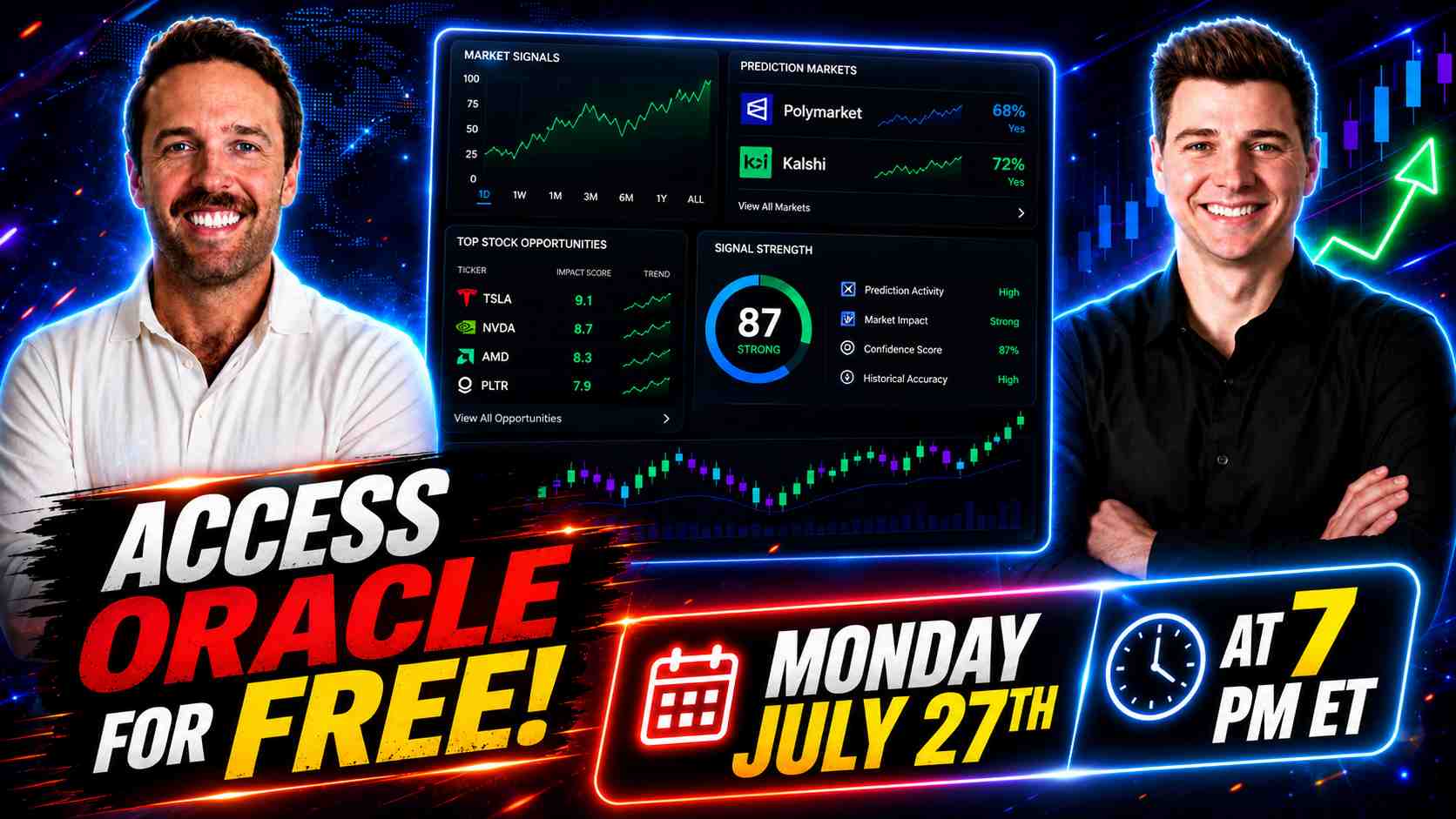
Join Alex and me at 7 p.m. ET and get free access to this breakthrough!
I Want Free Access to Oracle This Monday!
Disclaimer: The trades expressed are based on signals from Oracle in real time. While we have been using this tool with great success in our own trading including an 85.57% win rate, a 28% average return of winners and losers over a 4-day average hold time, and a profit factor of 5.94 on real money trades between 5/7/26 and 7/17/26, there’s bound to be winners and losers along the way. Since Oracle is a tool for traders and not a trading service, profits and performance will vary among users. Trade at your own risk. See our Terms on the homepage for more information.