
🚨I’ll be live at 2:30 p.m. ET with Alex🚨
We’ll cover how Alex and I are taking advantage of this Monday’s market pullback, the opportunities in the oil and gas sector with oil back up almost 4%, what Iran hitting the UAE with a drone means for the VIX and premium collection and more [tap to join us for Profit Panel]
I’ve been thinking through a problem that doesn’t really have a clean solution.
Actually, that’s not quite right — it has one solution, but that solution tends to create the exact problem it’s trying to fix.
We’re talking about a $39 trillion debt load. That’s not a rounding error — that’s the backbone of the entire macro conversation right now.
Here’s why this matters for traders.
The Impossible Math
The government has a massive stack of bonds outstanding that now require high interest payments. The political incentive is clear: Lower rates, reduce borrowing costs, and keep refinancing manageable.
But here’s the issue — you can’t just erase existing debt without breaking trust in the system. Default isn’t on the table.
So what’s left?
In practice, the system leans toward liquidity expansion — and that usually means more money creation over time. But that creates its own feedback loop. More liquidity tends to feed inflation, and inflation eventually forces higher rates, not lower ones.
So you end up in a loop: Pressure to cut rates, but conditions that push rates higher.
That tension is the core problem.
At the same time, the dollar index has been stuck in a wide range for over a year, oscillating between the mid-90s and upper range resistance. Normally, rising rates should support a stronger dollar, but that relationship hasn’t fully played out here. When something repeatedly fails to break higher, the risk shifts to the downside — and that matters for gold.
Layer in global diversification away from the dollar — including BRICS economies and large commodity exporters — and you get slow but persistent structural pressure on the dollar’s dominance. It doesn’t need to accelerate to matter; it just needs to continue.
What I’m Doing About It
This isn’t a short-term narrative — it’s structural positioning.
If inflation persists and the system continues leaning on liquidity to manage debt servicing, gold remains one of the clearest macro hedges in the market. Silver, too, has started showing early leadership at times, which often happens when precious metals are beginning to price in a weaker dollar environment.
I’m not treating this as a timing call — I’m treating it as a regime setup.
For traders watching levels, gold has been reacting around key moving averages and pivot zones like the 100-day and the $4,650 area in futures. Above those levels, momentum tends to stabilize. Below them, the tape gets more volatile and corrective.
Trader’s Note
Gold isn’t just reacting to headlines — it’s reacting to a slow-moving structural tension between debt, inflation, and currency stability.
And when those forces align like this, the market doesn’t usually resolve quietly.
👉 Click here to join Profit Panel at 2:30 p.m. ET on weekdays!
Geof Smith
Geof Smith Trading
Follow along and join the conversation for real-time analysis, trade ideas, market insights and more!
- Telegram: https://t.me/+lm8_Nq3Su104NmFh
- YouTube: https://www.youtube.com/@FinancialWars
Important Note: No one from the ProsperityPub team or Geof Smith Trading will ever contact you directly on Telegram.
*This is for informational and educational purposes only. There is inherent risk in trading, so trade at your own risk.
P.S. My 2026 Monthly Income Gameplan!
Check out how I plan to target monthly income throughout the year, no matter what happens on the charts next, using a signal that has delivered an historical 91% win rate on live trades.
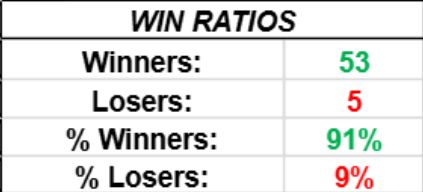
Disclaimer: We develop tools and strategies to the best of our ability, but we can’t guarantee the future. There is always a risk of loss when trading. Past performance is not indicative of future results. Stated results are from live, published alerts from 6/2/2021 to 4/7/2026. The win rate has been 91% on options, with an average return of 10% over a 3-day hold.