🚨 Profit Panel is live at 9:30 a.m. ET🚨
Everyone is watching oil, but I’m revealing the real commodity moving this market. Alex is out, but I’ll share my full opening watchlist and break down Kalshi’s 2026 rate hike odds [tap to join us for Profit Panel]
The markets haven’t just changed — they’ve been turned upside down.
I’ve been at this for more than three decades, and if you want to understand how wild the evolution has been, let me walk you through it.
Back in the 1990s, we were just discovering the internet. I’m not kidding.
You couldn’t search for much of anything — we were still using the Yellow Pages. Amazon (AMZN) only sold books, and if you wanted to know whether they actually had what you were looking for, you’d end up calling to check.
By about 2005, websites had improved, but there weren’t millions of them. Then the iPhone came out in 2007, and after that, the web exploded.
What It Cost to Trade — And How We Did It
Here’s the part that’ll get you: Commissions on S&P 500 index options were $40 to $50 per transaction. Eventually, they came down to about $20, and we traded with $20 commissions for a long time. Now? Zero.
You only had a handful of online brokers — Datek, Ameritrade and E*TRADE. That was pretty much it.
Then Charles Schwab introduced CyberTrader, which was a game changer. It felt modern, fast and intuitive — the closest thing we had to what ThinkorSwim later became.
For a few years, it gave everyday traders a taste of what professionals had before Schwab eventually pulled it back and reserved it for institutional users.
And get this — we were calling the pit to trade S&P 500 index options until about 2005 or 2006. You couldn’t trade them electronically. You’d place the order, they’d hand signal it to the pit floor, you’d wait for the fill and then they’d stamp your ticket.
The pit wasn’t just loud shouting. You had arbitrage traders who made their entire living off tiny pricing discrepancies.
One trader sat at a Globex terminal watching the E-mini S&P 500 while another stood in the pit trading the full-size S&P 500 contract.
If they spotted even a half-point spread between the two, they’d hit it instantly and lock in the difference. It was a whole ecosystem built on speed, hand signals and instinct.
The Market Themes That Drove Each Era
The tech boom heading into 2000 was fueled by Y2K fears. People were literally buying a year’s supply of food because they thought the lights were going to go out and computers would stop working.
Companies rushed to upgrade hardware and software, and investors piled into technology stocks.
When Jan. 1, 2000, came and went without disaster, the spending wave faded. Companies had already bought the new computers and updated their systems, enthusiasm evaporated and the Nasdaq bubble eventually burst.
Major geopolitical events moved markets too. When the U.S. went to war in 2003, defense contractors like RTX (RTX), Northrop Grumman (NOC) and Lockheed Martin (LMT) rallied hard.
Then money flowed into real estate, and the housing boom took over. Every era had its theme, and every shift pulled traders and investors into the next big narrative.
Back then, more people invested in blue-chip names like Disney (DIS), Johnson & Johnson (JNJ) and JPMorgan Chase (JPM). It was much more of an investing environment than a day-trading environment.
After the tech bubble, regulators introduced the pattern day trader rule because many traders were using excessive leverage.
That rule has been around for roughly 25 years, and only recently have we started seeing meaningful discussions about modernizing it.
The bottom line? I can’t think of anyone today who would call a broker to buy a stock — yet that used to be completely normal.
Things have changed tremendously. And they’re still changing.
Geof Smith
Geof Smith Trading
Follow along and join the conversation for real-time analysis, trade ideas, market insights and more!
- Telegram: https://t.me/+lm8_Nq3Su104NmFh
- YouTube: https://www.youtube.com/@FinancialWars
Important Note: No one from the ProsperityPub team or Geof Smith Trading will ever contact you directly on Telegram.
*This is for informational and educational purposes only. There is inherent risk in trading, so trade at your own risk.
P.S. I’m Revealing the Next Set of Wall Street’s Sleeper Cell Orders
My research led me to a hidden phenomenon that’s been giving Wall Street an edge for 64 years.
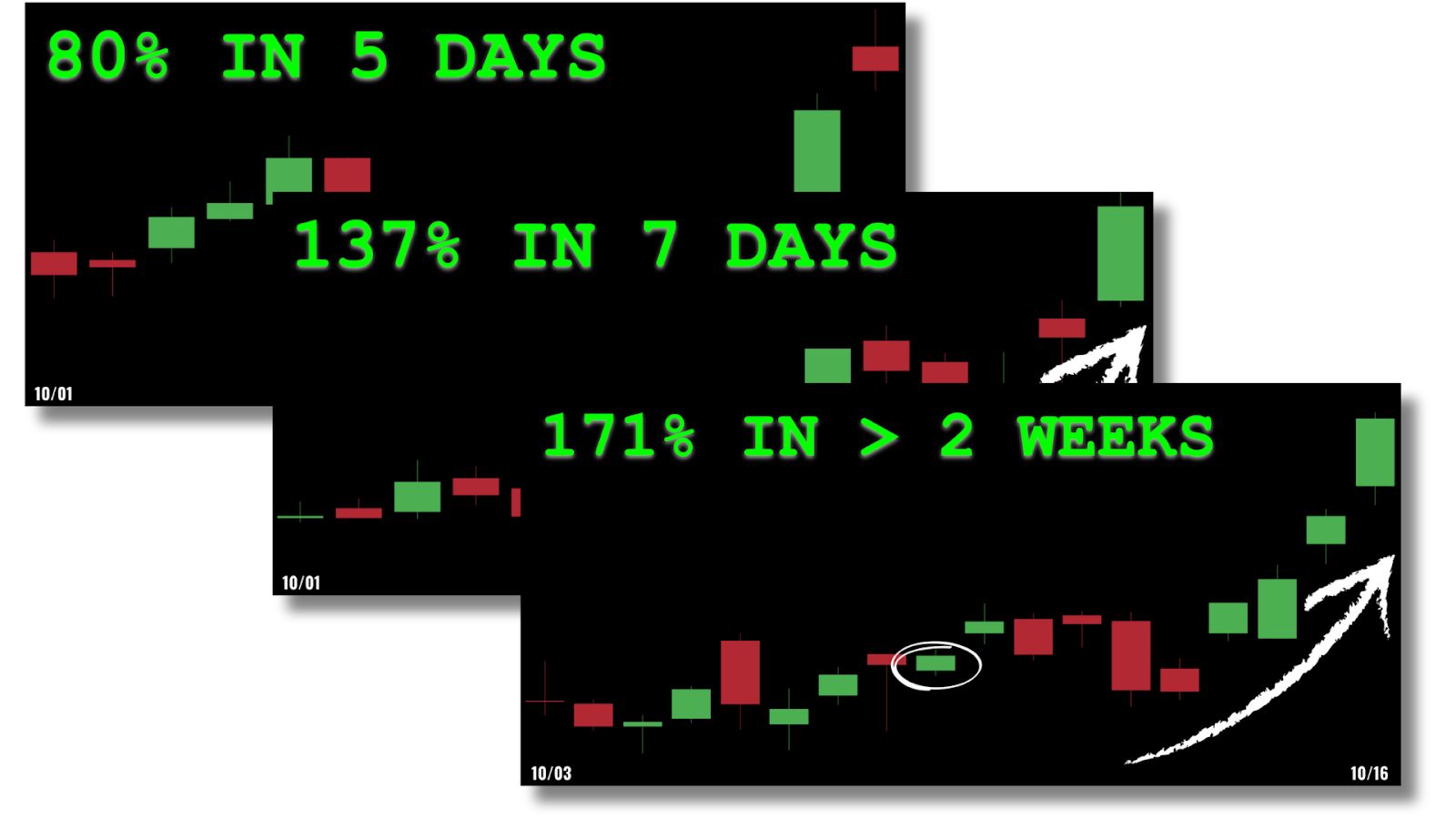
Now I’ve traced these sleeper cell orders to certain stocks set to surge this over the next few days
Disclaimer: The trades expressed today are based on signals from the Sleeper Cell Scanner with the benefit of 20/20 hindsight unless otherwise stated. According to a backtest of 64 years of data dating back to 1962, the signals pulled by the scanner would have been 81.9% accurate on over 7,300 trade signals… No strategy is perfect, and wins are not guaranteed. There are bound to be winners and losers along the way. Since the Sleeper Cell Scanner is a tool for traders and not a trading service, profits and performance will vary among users.