🚨 I’ll be live at 10 a.m. ET with Graham Lindman🚨
Is the bottom in? We’ll discuss that, a specific trade structure to take advantage of changing conditions and more [tap to join us for Opening Playbook]
Energy prices are staying elevated. We’re staring down the barrel of potentially hitting $5 a gallon at the pump on a national average. And yet — everything else has been rallying.
That’s not how it’s supposed to work, right?
Normally, when energy spikes, the broader market gets nervous. Higher oil means higher costs, lower margins, and consumer pressure — and stocks react accordingly. But this time, the rally isn’t tied to any major data shift. It’s sentiment-driven.
It’s not like oil dropped 15% and everything else rallied in response. Instead, the market is acting more like: “Yeah, maybe we’re stuck with expensive energy, but that’s fine — the rest of the landscape feels less risky now.”
We’ve been in a steady, rotational, sideways environment for weeks, where nothing breaks down aggressively but nothing collapses either. That slow grind has given the market room to absorb volatility without losing its footing and has kept the door open for a push back toward prior highs.
The Fear Trade in Reverse
What we’re seeing looks like a fear trade — but in reverse.
The market isn’t expecting relief from high energy prices. It’s accepting them. Investors are signaling they’re willing to tolerate elevated fuel costs as long as broader conditions stabilize.
And the longer this environment persists — with ongoing geopolitical strain — the more the market adapts. Reactions that might have triggered outsized fear a month ago barely move sentiment now.
This psychological shift matters: When fear fades, even gradually, capital flows back into the market. Financial Select Sector SPDR (XLF) has been acting as a sentiment barometer, outperforming on strong days and pulling back harder on weak ones. That sensitivity highlights how much of this market is being driven by emotion rather than fundamentals.
So instead of a traditional energy-driven sell-off, investors are compartmentalizing risk. Energy is one lane, and everything else is free to move independently.
What This Means for How You Trade
This type of environment changes how you approach risk.
If the market is willing to rally while energy stays elevated, waiting for oil to resolve before re-entering positions could leave you behind. At the same time, aggressively hedging for an energy-driven downturn hasn’t worked — at least not in this environment.
None of this means energy stops mattering. But right now, the market is behaving as if the worst-case scenario is already priced in. With geopolitical tension ongoing and investor responses evolving, the market is adapting rather than retreating.
Big picture: This window of decoupling won’t stay open forever. But while it is, it creates opportunities for traders who understand the psychology driving the move.
Now don’t forget to join us at 10 a.m. ET weekdays for Opening Playbook, and at 3:30 p.m. ET Closing Playbook!
Nate Tucci
Tucci Trades
Follow along and join the conversation for real-time analysis, trade ideas, market insights and more!
- Telegram: https://t.me/nate_tucci
- YouTube: https://www.youtube.com/@NewMoneyCrew
Important Note: No one from the New Money Crew team or Tucci Trades will ever contact you directly on Telegram.
*This is for informational and educational purposes only. There is inherent risk in trading, so trade at your own risk.
P.S. Want Free Access To My Top Income Secret?
You’ll see how to target $250, $500 and even $1,000 on a $2,500 stake every single week from the market, without trying to predict the direction.
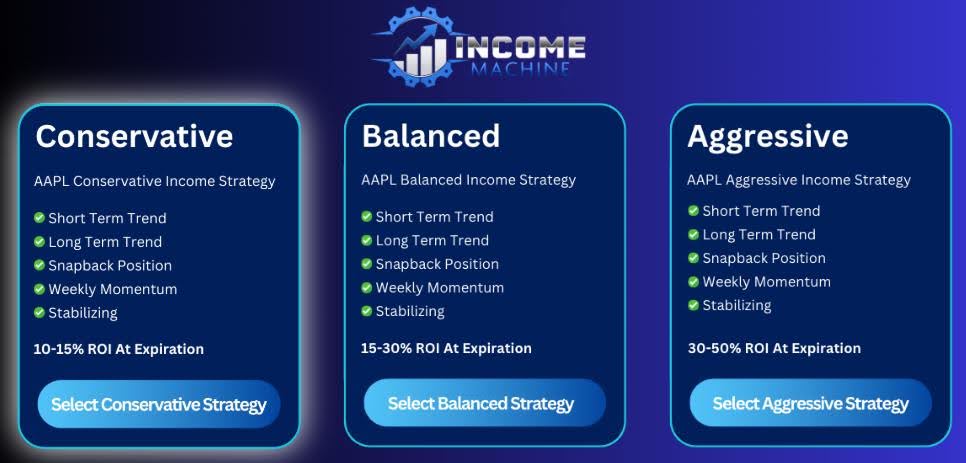
Disclaimer: We develop tools and strategies to the best of our ability, but no one can guarantee the future. There is always a risk of loss when trading. Past performance is not indicative of future results. While we have used the Income Machine with great success, we cannot guarantee future results. What you will see today are some of the best examples over the last few months. There were bigger winners, smaller winners, and losers. Since the Income Machine is a tool for traders and not a trading service, profits and performance will vary among users.