
🚨I’ll be live at 10 a.m. ET with Graham🚨
We’ll cover divergence, how to find it, market conditions and more [tap to join us for Opening Playbook]
You know what I’ve noticed? Most traders look at the market and think bullish or bearish — and that’s it. But that’s way too simple, because even in a strong bullish trend, not every day behaves the same. Some days have momentum, some are choppy, some gap higher and some barely move.
If you’re applying the same strategy every day regardless of conditions, you’re setting yourself up for frustration in environments that don’t match your approach. That’s why I built what I call a four-quadrant regime framework — it helps me identify what kind of market I’m actually trading, not just direction but the quality and intensity of the move.
And the longer you study markets, the more you recognize these environments repeat. This kind of structure is common during extended bullish phases, where strength at the macro level coexists with quieter, slower sessions underneath.
The 4 Measurements That Matter
Every morning, I rank the market across four quadrants.
First is the overall trend: We’re still in a strong bullish trend, and that sets the big-picture backdrop. Second is volatility: Specifically where the Cboe Volatility Index (VIX) is sitting, and right now we’re seeing relatively normal levels with nothing extreme.
Third is direction: This measures the short-term move from the prior close to the current price. Recently we’ve seen neutral direction — small gaps and limited follow-through early in the session. Fourth is intraday momentum: This captures what the market does in the first 15 minutes, and lately momentum has been minimal with moves around 0.08%, which is essentially flat.
So even with a bullish trend, we’re seeing a flat gap, minor movement and low momentum. That’s a very different setup than a bullish trend paired with a strong gap and early expansion.
This is where experience matters. When you’ve seen enough of these cycles, you recognize that strength combined with short pauses is part of a normal advance, and that perspective helps prevent overtrading in quieter sessions.
What the Internals Are Saying
Beyond those four measurements, I also look at internals to understand what’s happening beneath the surface.
Lately, internals have been mostly neutral, with some improvement on the volume side, which is constructive. At the same time, gamma exposure has shifted slightly negative, with more put positioning showing up in the S&P 500 (SPY), suggesting a more cautious tone even while the broader trend holds.
Intraday volatility has been quiet, and sector movement has been relatively balanced without a clear dominant leader.
This is where many traders struggle. After a few choppy sessions or small losses, the instinct is to abandon the plan and start over, but that reaction usually does more harm than good.
What these environments require is patience. Not every session is designed to deliver outsized returns. Over time, you learn that consistency doesn’t come from forcing trades — it comes from adapting to conditions, knowing when to press and when to stay selective.
That’s the purpose of this framework. It’s not about predicting what’s next — it’s about identifying what’s happening now and aligning your strategy accordingly. The market doesn’t adjust to you, but when you adjust to the market, execution becomes clearer and more consistent.
Now don’t forget to join us at 10 a.m. ET weekdays for Opening Playbook, and at 3:30 p.m. ET Closing Playbook!
Nate Tucci
Tucci Trades
Follow along and join the conversation for real-time analysis, trade ideas, market insights and more!
- Telegram: https://t.me/nate_tucci
- YouTube: https://www.youtube.com/@NewMoneyCrew
Important Note: No one from the New Money Crew team or Tucci Trades will ever contact you directly on Telegram.
*This is for informational and educational purposes only. There is inherent risk in trading, so trade at your own risk.
P.S. A Market Moving Decision Is on the Horizon Next Week — Are You Prepared?
The Fed is set to make a decision on interest rates next week. How the market would react to that decision is completely out of our control.
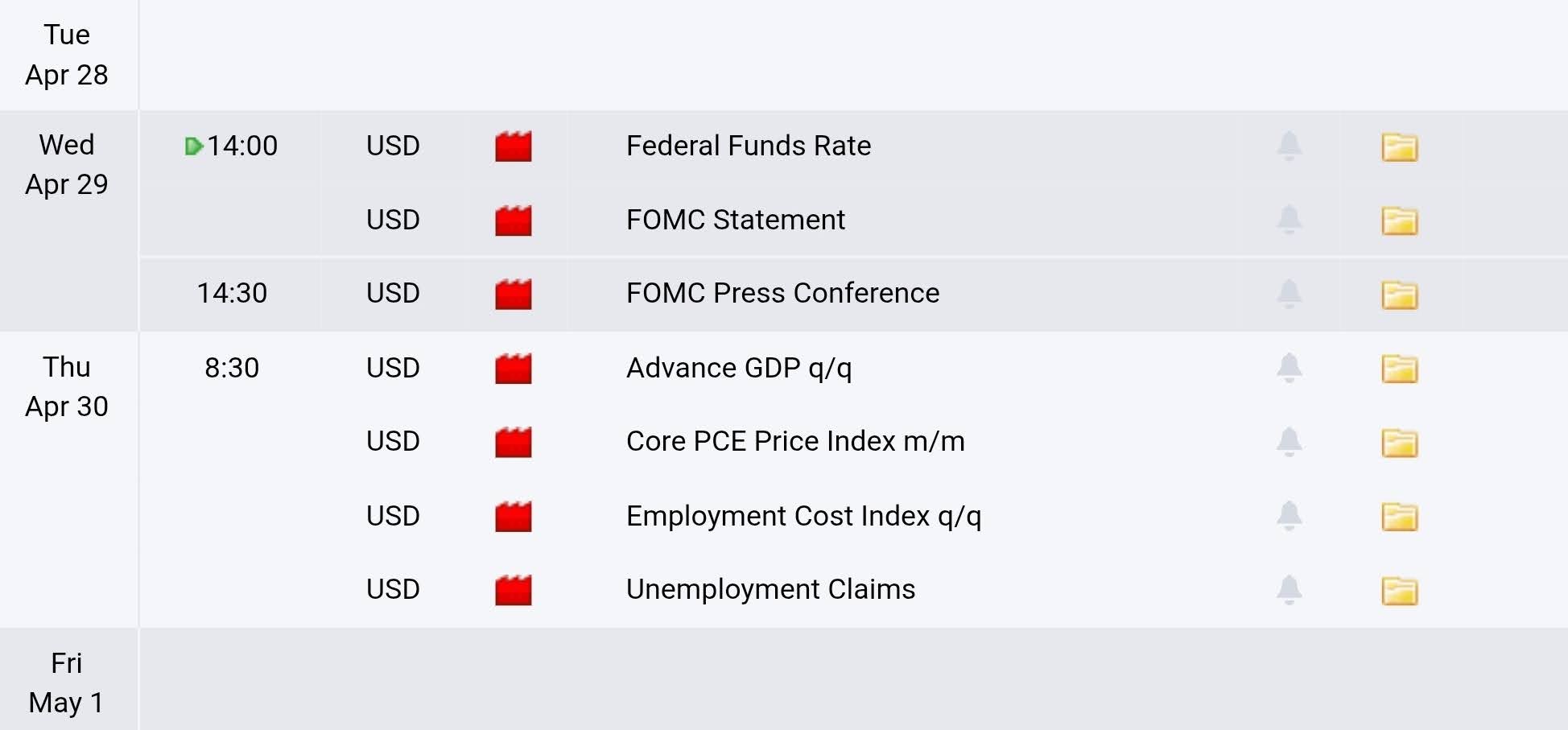
However, you can position yourself to benefit whichever way the market moves and target cash both ways using a unique trading approach