
>>>Join Nate and I weekdays at 10 AM ET for Opening Playbook — we have a special guest today, the one and only Roger Scott. We’ll cover the day’s biggest catalysts, trading opportunities and more, CLICK HERE TO JOIN US!<<<
There’s a strategy I use when I see a stock trending in the right direction — one that doesn’t require explosive moves or perfect timing. It just needs the stock to keep doing what it’s already doing.
That’s what makes wrap orders so effective. We don’t need a crazy move higher, we just need the stock to drift slightly in the direction it’s already headed.
I call them wrap orders, and I recently put one on using International Business Machines (IBM) as a live example to show exactly how powerful this approach can be.
I gave this trade on Tuesday during Opening Playbook, but it looks to still be in play this morning.
IBM was trending higher with bullish signals, so I constructed a debit spread by buying the Dec. 19 expiration, $312.50 strike call and selling the $315 call for a net debit of $1.30.
But got a bit of a dip following yesterday’s FOMC rate cut, but here’s what makes this so compelling: This structure delivers a 92% return on investment if IBM closes above $315 by expiration. As of the close Wednesday, you could get in for around the same price, needing the stock to move just 1% higher by expiration.
Compare that to buying basic calls. To get that same 92% ROI with straight call options, IBM would need to move significantly higher — way beyond that $315 level.
Which scenario sounds more likely to you?
Why Probability Matters More Than Potential
Look, I get it. Call options can outperform if a stock makes a massive move. If IBM rockets higher beyond my strikes, a basic call buyer could make more than my wrap order.
But that’s not the game I’m playing. When you understand how to use probability instead of chasing possibility, your trading changes. You stop needing perfection and start profiting from consistency.
The beauty of using wrap orders is that we don’t need a dramatic breakout. We’re simply leaning into the natural drift of a stock within its existing trend, which happens far more often than explosive upside moves. That’s a statistical edge — and it’s one I want working for me every time.
How I Manage These Trades
My exit strategy is simple: I let it expire. My goal is to get IBM to close above those strikes on that Friday. They expire, they offset each other, and it’s max profit for me.
No need to babysit it. No need to guess the perfect exit. Just let the trade work within the structure I built.
This is the kind of setup I look for when I see a stock trending in the right direction but don’t want to depend on a massive rally to get paid. At-the-money debit spreads wrapped around the current price give me a much smaller move requirement to nearly double my money — and that’s an edge I’ll take every time.
When you learn to trade with probability instead of chasing possibility, everything shifts. You start building consistency rather than hoping for perfection.
That’s the beauty of wrap orders!
Graham Lindman
Graham Lindman Trading
Follow along and join the conversation for real-time analysis, trade ideas, market insights and more!
- Telegram:https://t.me/+abM5RWRJKrpkNWI5
- YouTube:https://www.youtube.com/@NewMoneyCrew
Important Note: No one from the ProsperityPub team or Graham Lindman Trading will ever contact you directly on Telegram.
*This is for informational and educational purposes only. There is inherent risk in trading, so trade at your own risk.
P.S. Mimic Institutional Traders in REAL TIME…
You’ve probably heard “follow the money” a million times… but no one’s showing you how to do it.
So today, Roger Scott is revealing a way for traders like you to cut through the noise and mimic institutional investors’ moves… as they happen.
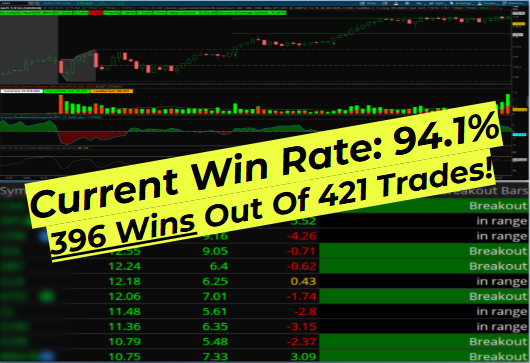
In fact, you would have been able to lock in a 94% win rate on nearly 400 trade alerts…
Show Me How to Mimic Wall Street in Real Time!
We develop tools and strategies to the best of our ability, but no one can guarantee the future. There is always a risk of loss when trading. Past performance is not indicative of future results. Stated results are from hypothetical options applied to real published signals from 10/30/23 – 11/26/2025. The result was a 94.1% win rate on 421 trades, an average return of 11.2% including winners and losers and an average hold time of less than 24 hours.