
🚨I’ll be live at 10 a.m. ET with Nate🚨
Nate says he’s invented a new trade for the current market and he’s going to teach it to everyone live on the show today [tap to join us for Opening Playbook]!
Before getting into the bearish argument, it’s worth noting that the market still sits in a seasonally strong window. Historically, this stretch has pushed higher 92% of the time with an average return of around 8.8%.
Tech momentum has been particularly impressive, with the Nasdaq 100 (QQQ) riding above its 10-day moving average for weeks on end. That kind of strength usually leads to higher prices over the following year, and the only time it failed was during the dot-com unwind.
This is why I always start with the bullish data — because it’s real and it’s powerful and the market generally wants to move higher.
But every now and then, something forces a recalibration, and this is one of those moments. Paul Tudor Jones recently laid out a bearish case that’s hard to ignore. And when someone with his track record speaks, I listen.
He pointed out that stock market capitalization to GDP currently sits at 252%. Before the Great Depression, we were at 65%. Before the 1987 crash, we hit around 85-90%. During the 2000 tech bubble, the peak was roughly 170%.
We’re already well beyond where we were during the dot-com mania — and that alone is sobering. It also comes with a major caveat. Comparing these valuation levels across eras is tricky because national debt levels have exploded and the U.S. left the gold standard in 1970, fundamentally altering the macro backdrop.
Even with those shifts in mind, though, the numbers are concerning.
What the Numbers Tell Us About Forward Returns
Jones also notes that purebred bear markets have historically given us some form of mean reversion roughly every decade. If the market were to revert to the past 25-30 year average P/E ratio, it would imply a 30-35% decline. And if you buy the S&P 500 (SPY) at a P/E of 22 — roughly where we sit — historical data shows negative 10-year forward returns.
We’ve been through this kind of stretch before. The 2000s leading into 2008, the 2008 to 2014 window and the grinding 1970s all delivered long periods with flat or negative returns. Those cycles happen, and odds are we’ll face another one.
There’s also the structure of this rally to consider. Much of the upside has been carried by a handful of massive companies, not broad participation. When mega-caps do all the lifting, it supports the mean-reversion argument and increases the risk of sharp swings.
Timing Matters More Than the Thesis
Here’s where nuance matters. I don’t disagree that we’ll probably see a 30-35% correction sometime within the next decade, maybe even a bit sooner. But that doesn’t mean the near term should be written off.
As I’ve said before, if you sit on your hands over the next year, you’re probably going to look back and kick yourself. My base case is that any major unwind comes later — maybe 2027 or 2028 — not right now.
That doesn’t excuse ignoring risk. It means you weigh both sides. You respect the bullish seasonality and strong tech momentum while still acknowledging the valuation and structural concerns building underneath.
And you prepare yourself. The next few years are likely to test traders in ways we haven’t seen in a long time. It’s going to take an iron gut to trade through this. You need a plan, you need to stick with that plan and you can’t let emotions take the wheel when volatility inevitably kicks up.
Graham Lindman
Graham Lindman Trading
Follow along and join the conversation for real-time analysis, trade ideas, market insights and more!
- Telegram:https://t.me/+abM5RWRJKrpkNWI5
- YouTube:https://www.youtube.com/@NewMoneyCrew
Important Note: No one from the ProsperityPub team or Graham Lindman Trading will ever contact you directly on Telegram.
*This is for informational and educational purposes only. There is inherent risk in trading, so trade at your own risk.
P.S. The Options Market Is Far From Efficient!
There’s a weird glitch that regularly misprices contracts in the options chain. Pricing them way below true value.
The good thing is, I’ve been exploiting it for a shot at weekly payouts…
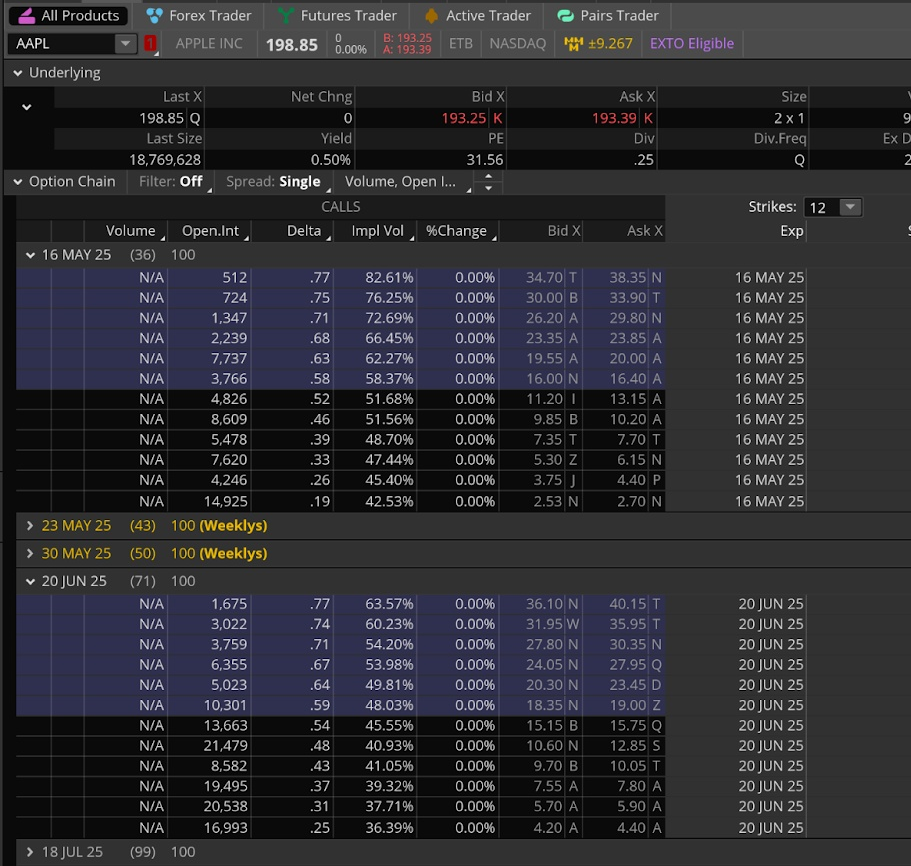
Want to see exactly how you can do the same?