
🚨 I’ll be live at 10 a.m. ET with Nate Tucci🚨
Grab a coffee and join Dave at 9:50 a.m. ET for the preshow. It will make the show way easier to follow [tap to join us for Opening Playbook]!
Here’s a question I get all the time: Why would I trade spreads when I can just buy a basic call or put? The answer comes down to three massive advantages that can transform your trading results — and the math might surprise you.
When you’re buying a basic call option, you’re paying for a whole bunch of time decay, and it’s working against you every single day.
This is exactly where spreads shift the entire equation. With a debit spread, you’re not just buying — you’re simultaneously selling another option to offset that time decay.
That single structure dramatically reduces cost and helps you control risk, which is the foundation of staying in the game long enough to grow. Controlling your risk will keep you in the game and we can help you learn structures and strategies to do just that.
The Power of Offsetting Time Decay
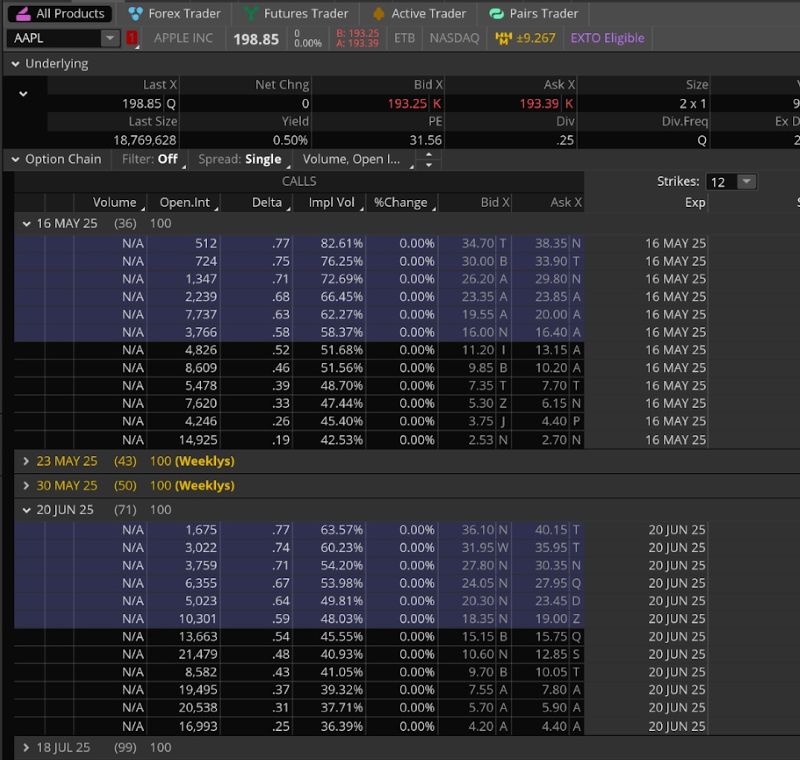
Let me show you exactly how this works with real numbers. When you’re buying one contract for say $5.50 and then selling another one for $5, you’ve just brought your costs down dramatically.
Instead of risking $5.50 per contract (that’s $550 for one contract), you’re now only risking $0.55 ($55 per contract). That’s a 90% reduction in your capital requirement.
The benefits are crystal clear: You get to offset a lot of time decay, you get a much cheaper entry cost and you can still go for high returns. This isn’t just theory — it’s practical math that impacts every trade.
Calculating Your Maximum Profit Potential
Here’s where the numbers get even more interesting. Our max value with a debit spread, it’s the difference of the two strikes. That’s the most your spread could possibly be worth at expiration.
Let’s say you pay an entry cost of $0.55. That leaves you with $0.45 of profit available. So your maximum return on investment? An 81% ROI — all while committing far less capital upfront.
Instead of tying up $550 per contract, you’re only using $55, yet you can still capture the same directional move you wanted in the first place. It’s efficient, strategic and designed to minimize exposure while maximizing potential.
For those who want to run these calculations on their own trades, we have a calculator in the Opening Playbook members area. If you ever want to know how much your debit spread could be worth or what the payout potential looks like, you can find it there — it’s straightforward and powerful.
Graham Lindman
Graham Lindman Trading
Follow along and join the conversation for real-time analysis, trade ideas, market insights and more!
- Telegram:https://t.me/+abM5RWRJKrpkNWI5
- YouTube:https://www.youtube.com/@NewMoneyCrew
Important Note: No one from the ProsperityPub team or Graham Lindman Trading will ever contact you directly on Telegram.
*This is for informational and educational purposes only. There is inherent risk in trading, so trade at your own risk.
P.S. The Options Market Is Not as Efficient as You Think!
I just found a “glitch” in the way options are priced…
And I’ve been exploiting it for a shot at weekly payouts.
Want to see exactly how you can do the same?
We develop tools and strategies to the best of our ability, but no one can guarantee the future. There is always a risk of loss when trading past performance is not indicative of future results. From 10/05/23 through 30/01/26 the average return per trade winners and losers was 29.89% with an average winner of 92% and a 61% win rate over a four day hold time.