
🚨I’ll be live at 2:30 p.m. ET with Alex🚨
We are analyzing the market’s TACO (Trump Always Chickens Out) stance on Iran, deciding if the Disney rebound is a trap or a buy, and why glass is king for NVDA and Corning [tap to join us for Profit Panel]
Drought conditions and smart-money positioning point to something brewing in the grain markets.
I don’t spend a lot of time looking at the Commitment of Traders (COT) report — honestly, it’s not usually my thing — but when I dug into wheat recently, something caught my eye.
Institutional traders are holding a large net-long position in wheat. These aren’t just speculative players chasing momentum — these are end-users, the companies that process wheat into food products.
When they load up on long exposure, it usually means they’re preparing for real-world supply issues, not chart noise.
And there’s plenty to be concerned about. Drought conditions are worse than most realize, and harvest is coming up fast.
Down south, wheat harvest gets going in June, then the combines chase the season north through late July. That staggered window means we could see supply shocks ripple region by region as yields come in, and early reports could easily set the tone for the rest of the country.
Another piece to keep in mind is input costs. Farmers typically pre-purchase most of their fertilizers and chemicals, so this year’s crop isn’t getting hit by those headline-grabbing spikes.
But diesel is a different story. The machines need fuel now, and diesel prices are already eating into margins. High input costs today and higher fertilizer costs next season, combined with drought-driven yield issues, create a messy backdrop.
For comparison, corn has been acting up too, but for different reasons. Corn hitting $5 has more to do with next season’s fertilizer costs than current production threats, which is why it’s dangerous to lump all grains together.
If you’ve been listening to the media, be careful — the explanations getting tossed around are often oversimplified or flat-out wrong. Each grain market moves on its own set of drivers.
Why the Smart Money Is Positioned Long
End-users don’t typically load up unless they see trouble ahead. Between the drought severity and the rolling harvest window, it makes sense that they’re preparing for tighter supply.
Wheat has already started to perk up. Add in an improving technical picture — a breakout above resistance, a clean retest and a bounce — and you’ve got both the chart and the fundamentals pointing in the same direction.
A Quick Note on Wheat ETNs
If you’re looking at wheat through an ETN, remember these products track near-month contracts and roll to the next one as expirations approach.
Every roll can create chart gaps, sometimes large ones, and they’re perfectly normal. A gap doesn’t mean something broke — it just means the ETN shifted from one contract month to another and pricing adjusted accordingly.
The setup here is straightforward: worsening drought, a harvest that could disappoint, real end-users hedging for tight supply and charts confirming the move.
Corn may be driven by next season’s input costs, but wheat’s story is unfolding in real time — and the smart money is already positioning for it.
👉 Click here to join Profit Panel at 2:30 p.m. ET on weekdays!
Geof Smith
Geof Smith Trading
Follow along and join the conversation for real-time analysis, trade ideas, market insights and more!
- Telegram: https://t.me/+lm8_Nq3Su104NmFh
- YouTube: https://www.youtube.com/@FinancialWars
Important Note: No one from the ProsperityPub team or Geof Smith Trading will ever contact you directly on Telegram.
*This is for informational and educational purposes only. There is inherent risk in trading, so trade at your own risk.
P.S. My 2026 Monthly Income Gameplan!
Check out how I plan to target monthly income throughout the year, no matter what happens on the charts next, using a signal that has delivered an historical 91% win rate on live trades.
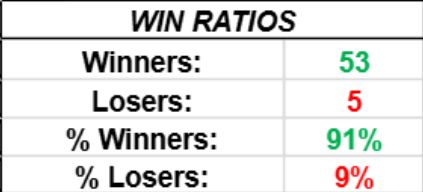
Disclaimer: We develop tools and strategies to the best of our ability, but we can’t guarantee the future. There is always a risk of loss when trading. Past performance is not indicative of future results. Stated results are from live, published alerts from 6/2/2021 to 4/7/2026. The win rate has been 91% on options, with an average return of 10% over a 3-day hold.