
🚨I’ll be live at 10 a.m. ET with Graham🚨
Heads up, Stocks to Trade is taking over the Opening Playbook. They’re doing a deep dive on strategy, so it’s a solid one to join if you want to level up. See ya there [tap to join us for Opening Playbook]
I get it. The market feels wild right now. All over the place. When you’re staring at a screen watching every tick, it feels that way. The swings feel dramatic, the moves feel unpredictable.
But here’s the thing most traders miss: The market is actually quite concentrated — way more than people realize.
I show this to traders every single day, and it always catches them off guard. Markets do move in spurts, but over time those moves tend to cluster around the middle. It’s common for the S&P 500 (SPY) to spike to -1% intraday, only to close well above that level. When you look at both the peaks and where price actually settles, a lot of that drama ends up being intraday noise.
And here’s where it gets even more interesting. In a backtest of more than 1,200 similar sessions, after 9:45 a.m. ET, SPY closes higher about 60% of the time and lower about 40%. That’s the kind of subtle edge most traders overlook.
What Market Concentration Really Looks Like
When I break down intraday action, most of the movement still falls within a relatively tight range — roughly -0.5% to +0.5%. That’s not insignificant, but we’re talking about averages, not extremes.
By the close, that concentration tightens even more toward the middle. So even on days that feel chaotic, the market usually settles into a fairly predictable zone by the bell.
I look at this through three lenses: Open-to-close, close-to-close and session start-to-close, tracking both intraday peaks and closing levels across each. That layered view gives a much clearer read on what’s actually extreme versus what just feels extreme in the moment.
How I Use This in My Trading
Here’s a practical example. Let’s say the market starts chopping around and drifts lower to about -0.75% intraday. That’s where a lot of traders start to panic.
Instead, I’ll structure a defensive trade that gives the market room down to -1%. Why? Because you only see that level about 16% of the time. And more importantly, the close tends to concentrate well above -1%, even on weaker sessions.
That’s also why most of my defensive positioning sits below the market rather than above it. There’s a persistent bullish bias in the data, even during sessions that start with selling pressure. So unless I’m actively hedging, my setups naturally lean bullish.
This week, my student Cynthia leaned into that edge and booked nearly 100% profits with a more aggressive spread, while John took a defensive route and locked in a steady gain. Different approaches, same underlying principle — understanding where the market tends to settle.
Trader’s Mindset
Not every insight needs to be traded. A lot of the edge comes from knowing when to sit on your hands and avoid forcing trades during normal volatility.
Context is what keeps you grounded. When you understand the probabilities behind the moves, you stop reacting emotionally and start making decisions with intent.
Now don’t forget to join us at 10 a.m. ET weekdays for Opening Playbook, and at 3:30 p.m. ET Closing Playbook!
Nate Tucci
Tucci Trades
Follow along and join the conversation for real-time analysis, trade ideas, market insights and more!
- Telegram: https://t.me/nate_tucci
- YouTube: https://www.youtube.com/@NewMoneyCrew
Important Note: No one from the New Money Crew team or Tucci Trades will ever contact you directly on Telegram.
*This is for informational and educational purposes only. There is inherent risk in trading, so trade at your own risk.
P.S. A Market Moving Decision Is on the Horizon Next Week — Are You Prepared?
The Fed is set to make a decision on interest rates next week. How the market would react to that decision is completely out of our control.
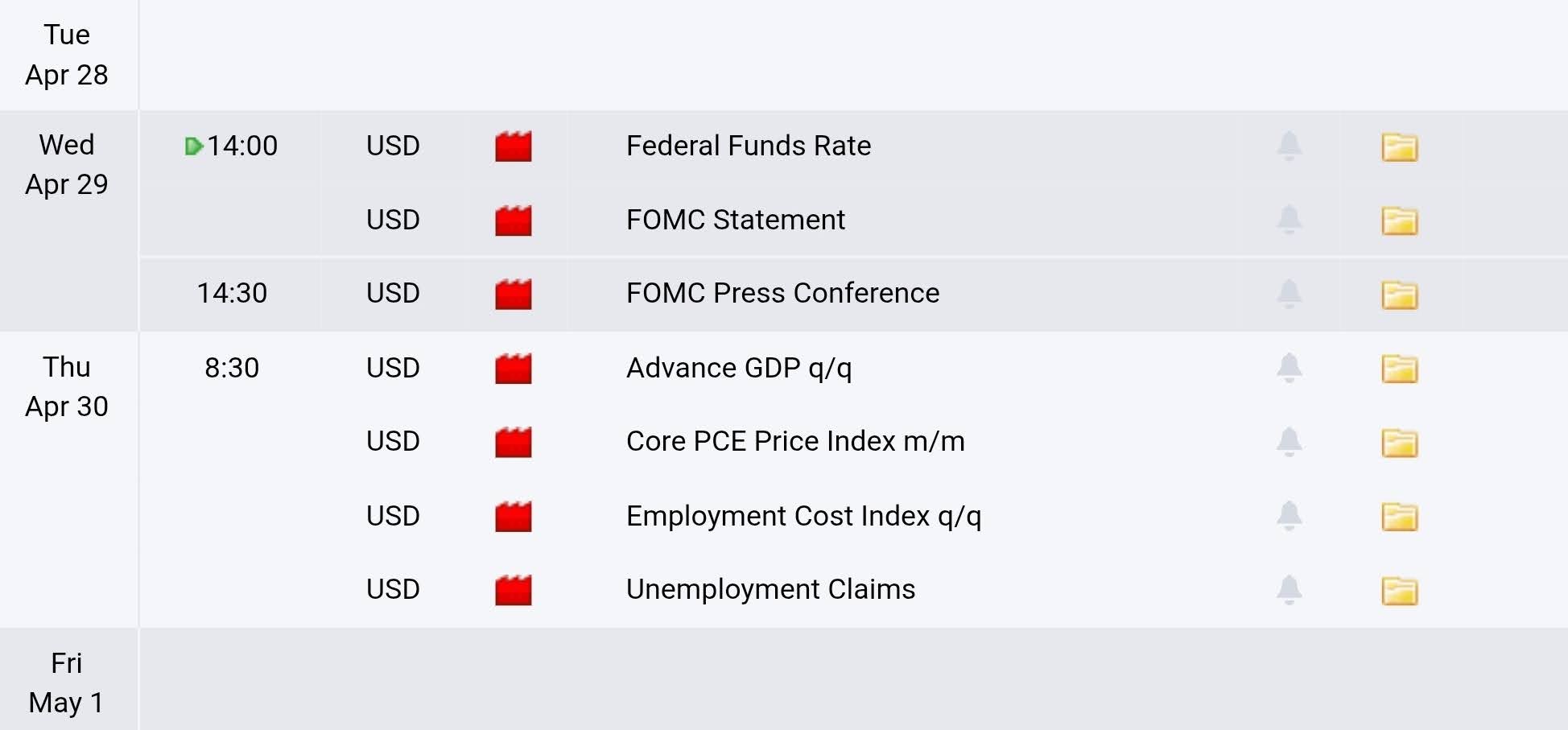
However, you can position yourself to benefit whichever way the market moves and target cash both ways using a unique trading approach