
🚨 I’ll be live at 10 a.m. ET with Graham Lindman🚨
We’ll into some charts of the week, inflation, war and the potential for a rate hike rising, the worst quarter in a four-year presidential cycle is here, earnings and more [tap to join us for Opening Playbook]
Here’s something that trips up almost every trader: They think the goal is to be right more often, chasing a higher win rate, better accuracy, and more winners than losers. And look — it feels good to be right. It feels smart and like progress.
But here’s what most people miss: Your brain is a pattern-matching machine, and it’s terrible at counting the misses. It latches onto the sting of a loss and convinces you that being wrong is the problem, even when the data says otherwise. That’s why a 55% win rate you can apply 1,000 times is more profitable than a 58% win rate you can only apply 250 times.
Let me say that again — because it’s counterintuitive as hell. A 55% win rate strategy — the one that feels mediocre — can outperform a 58% win rate strategy if you can use it far more often. This is the math that breaks people’s brains, but it’s also what separates profitable mechanical traders from everyone else.
The Problem With Filtering for Perfection
Here’s what happens when traders try to improve a strategy: They start adding filters to avoid losers and only take the best setups. Those filters might increase your win rate — a 55% win rate might become 58%, and your profit factor might improve from 1.1-1.3. Sounds great, right?
Except now you’ve eliminated 75% of your trades. By filtering so aggressively, you reduce opportunities so much that even with a higher win rate and profit factor, you’re multiplying it fewer times — and making less money overall.
Over 1,000 trades, a 3 percentage point edge gives you roughly 30 more wins. But to get that edge, you’re no longer taking 1,000 trades — you’re taking closer to 250. Those 30 extra wins don’t make up for the 750 opportunities you gave up.
The real choice becomes simple: A 1.3 profit factor with a 30% annualized gain, or a 1.1 profit factor with a 50% annualized gain. Most traders choose the 1.1, even with the losing streaks, because the compounding is stronger.
The Real Edge: Repetition Over Precision
This is why strategies like Overnight Options work. They’re not trying to be right 70%-80% of the time — they’re aiming for 54%-55% and executing consistently, day after day. The edge is real, but it’s small, and that’s fine.
The advantage isn’t a massive profit factor. It’s applying that edge enough times over enough years that it compounds into something meaningful. You’re not going to win every day or every month — it’s the accumulation of results over time that matters.
It’s not a secret sauce or a magic setup — it’s just math. If you’re not comfortable with that, mechanical trading isn’t the right fit, because the answer will always come back to the same thing.
But if you can accept it — if you can let go of needing to be right and focus on applying small edges consistently — you can do very well.
The real edge comes from multiplying it as many times as possible, not filtering, not perfecting, and not avoiding every loser. Just showing up, taking the trade, and letting the math do its job.
Now don’t forget to join us at 10 a.m. ET weekdays for Opening Playbook, and at 3:30 p.m. ET Closing Playbook!
Nate Tucci
Tucci Trades
Follow along and join the conversation for real-time analysis, trade ideas, market insights and more!
- Telegram: https://t.me/nate_tucci
- YouTube: https://www.youtube.com/@NewMoneyCrew
Important Note: No one from the New Money Crew team or Tucci Trades will ever contact you directly on Telegram.
*This is for informational and educational purposes only. There is inherent risk in trading, so trade at your own risk.
P.S. Want Free Access To My Top Income Secret?
You’ll see how to target $250, $500 and even $1,000 on a $2,500 stake every single week from the market, without trying to predict the direction.
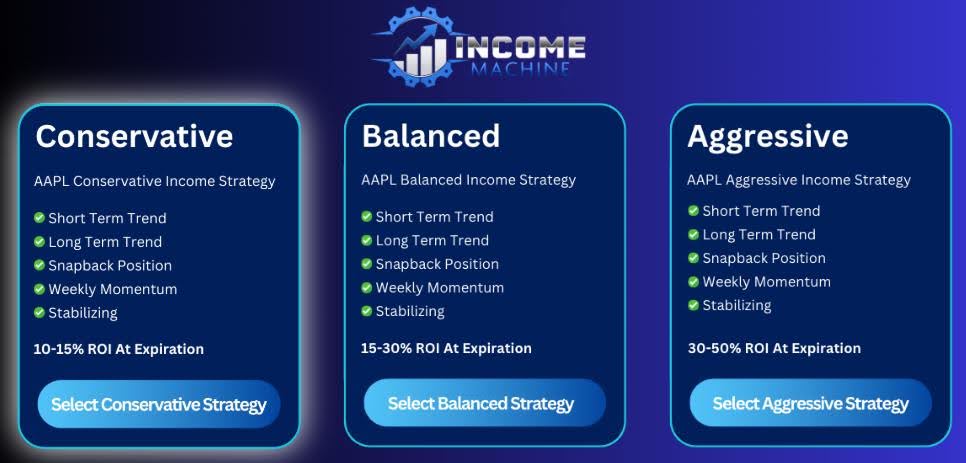
Disclaimer: We develop tools and strategies to the best of our ability, but no one can guarantee the future. There is always a risk of loss when trading. Past performance is not indicative of future results. While we have used the Income Machine with great success, we cannot guarantee future results. What you will see today are some of the best examples over the last few months. There were bigger winners, smaller winners, and losers. Since the Income Machine is a tool for traders and not a trading service, profits and performance will vary among users.