🚨 I’ll be live at 10 a.m. ET with Graham Lindman🚨
We’ll take a look at the next gold trade, do a market overview with weekend expectations, Dave is going to do part 2 of understanding butterfly and calendar spreads and more [tap to join us for Opening Playbook]
Here’s a question I get all the time: When you’re setting up a neutral trade — like an iron condor or a butterfly — how do you decide between wider strikes or tighter ones?
Most traders think it’s about probability, and yeah, that matters. But there’s a more important question you should be asking first: Are you planning to manage the trade, or let it expire?
That one decision changes everything about how you structure the trade. It becomes even more important on days when the market opens flat with low momentum, because those conditions can keep price drifting inside a tight range.
2 Ways to Play Neutral Structures
When I’m building a box around price, I have two choices. I can go wide and give price more room to move, or I can go tight and collect more premium with less flexibility.
Here’s my rule: If I’m holding to expiration, I go wider. I want price to stay contained, and a quiet, neutral open increases the odds of that happening.
But if I’m planning to manage the trade, I lean toward tighter strikes with higher risk-to-reward. Low momentum can shift quickly, and I want a structure that pays me when price moves through the range.
A Real Trade Example
Let me walk you through how this plays out. I put on a neutral trade in S&P 500 (SPX) using a call spread and a put spread to build a box around price.
My initial setup was around 6790/6795 on the call side and 6755/6750 on the put side, targeting about $2.30 in credit. But I couldn’t get filled at that level, so instead of forcing it, I adjusted the structure.
I tightened the box slightly, shifting the strikes to improve the premium, and that allowed me to collect closer to $2.50. That adjustment made the trade more efficient for what I was trying to do.
Don’t Mix Your Strategy With the Wrong Mindset
Some traders would look at that adjustment and say it hurts probability. That’s true if you’re targeting expiration, but that wasn’t the plan here. I was positioning for a crossover and planning to manage the trade actively.
In that context, tightening the structure and increasing premium makes sense. When the market isn’t giving you the fill you want, sometimes the better move is to adapt the structure instead of forcing the trade.
And remember, the risk isn’t doubled just because you have two sides. Since the index can’t close in two places at once, one side is always going to work in your favor, keeping the real risk more balanced.
Most traders get stuck because they’re using an expiration mindset on a management trade — or a management mindset on an expiration trade. Strike selection only works when it aligns with your actual plan.
Know your plan first, then structure the trade to fit it.
Now don’t forget to join us at 10 a.m. ET weekdays for Opening Playbook, and at 3:30 p.m. ET Closing Playbook!
Nate Tucci
Tucci Trades
Follow along and join the conversation for real-time analysis, trade ideas, market insights and more!
- Telegram: https://t.me/nate_tucci
- YouTube: https://www.youtube.com/@NewMoneyCrew
Important Note: No one from the New Money Crew team or Tucci Trades will ever contact you directly on Telegram.
*This is for informational and educational purposes only. There is inherent risk in trading, so trade at your own risk.
P.S. Want Free Access To My Top Income Secret?
You’ll see how to target $250, $500 and even $1,000 on a $2,500 stake every single week from the market, without trying to predict the direction.
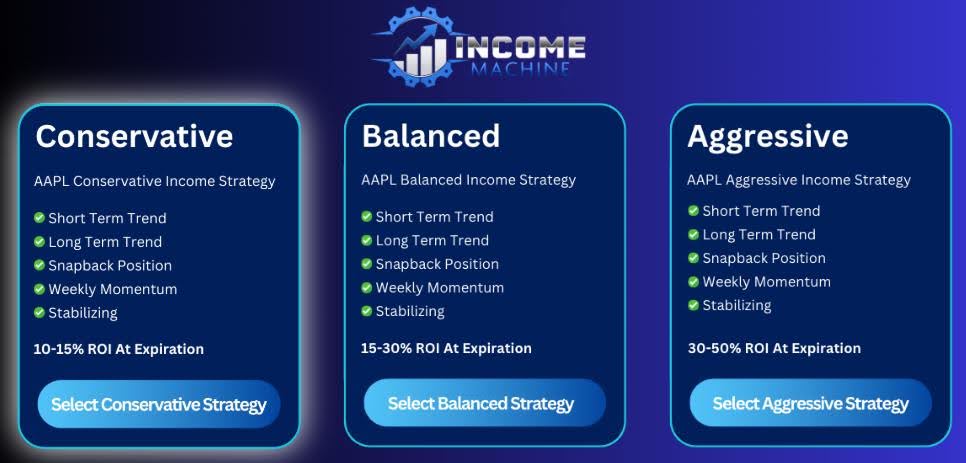
Disclaimer: We develop tools and strategies to the best of our ability, but no one can guarantee the future. There is always a risk of loss when trading. Past performance is not indicative of future results. While we have used the Income Machine with great success, we cannot guarantee future results. What you will see today are some of the best examples over the last few months. There were bigger winners, smaller winners, and losers. Since the Income Machine is a tool for traders and not a trading service, profits and performance will vary among users.