You know that place where you supposedly eat healthy while downing a burrito the size of a small child? Yeah, Chipotle. I went there the other day and my burrito bowl cost me more than — well, maybe not more than my first car, but it felt close.
Turns out, I’m not the only one feeling the pinch. While you and I are debating whether to add guac for an extra $3, Chipotle’s CEO Scott Boatright dropped a truth bomb on a recent earnings call that reveals exactly how corporate America is playing the wealth divide.
He said, and I quote, “60% of our core users make over $100,000 a year in income,” and then added that this gives them confidence to “lean into that group in a more meaningful way.”
Let me translate that corporate speak for you: We’re going to charge them more money because if you’re making six figures, obviously you can afford a $20 burrito bowl. It’s just math, right?
This is the K-shaped economy playing out right in front of us — the top line going up, the bottom line coming down. The rich have money. Everybody else? They’re eating at home now.
And these companies don’t care.
This, my friends, is the perfect example of the K-shaped economy. Imagine the letter K — the top line going up where the rich get richer, the bottom line coming down while the poor get poorer.
That’s our economy in a nutshell.
The data backs this up: A staggering 59% of consumer spending now comes from the top 20% of income earners. So while some of us are clipping coupons and hunting for deals on mac and cheese, apparently the wealthy are out there dropping cash on luxury goods, travel and a whole bunch of burrito bowls at Chipotle.
A Value War Is Erupting Below
Here’s where the story gets interesting for us as traders and investors. While Chipotle chases the high-income crowd, a full-blown value war is erupting in fast food.
McDonald’s (MCD), Wendy’s (WEN), Burger King from Restaurant Brands International (QSR) and Taco Bell from Yum Brands (YUM) are all rolling out deals and value menus, fighting for the attention of budget-conscious consumers.
Wendy’s has biggie deals starting at just four bucks. McDonald’s is slashing prices on combo meals. It’s kind of a race to the bottom — and a fascinating contrast to Chipotle’s “let them pay more” strategy.
How to Play This Split
So how do we turn this into investment opportunities? You’ve got a few different ways to play it.
First, you can bet on Chipotle. Their stock had a rough year, but if you believe in the K-shaped economy and think the wealthy are going to keep spending on burritos, Chipotle could be a good long-term buy. They’re betting their premium brand will weather this storm.
Second, you could look at the value players — companies like McDonald’s, which already has a global footprint, and Yum Brands, which owns Taco Bell and KFC.
They’re positioning themselves as the affordable option in a time of economic uncertainty. That’s a powerful place to be.
Third, there are companies trying to do both, like Brinker International (EAT), which runs Chili’s. They’re finding success with a mix of value and quality — not as cheap as McDonald’s, not as expensive as Chipotle. That seems to be a sweet spot for a lot of consumers right now.
Finally, don’t forget about Cava (CAVA), the new kid on the block and a direct competitor to Chipotle. They’re expanding fast and focused on digital innovation, which could give them an edge.
So there you have it — a tale of two burritos, one for the rich, one for the rest of us. It’s a story about more than just lunch. It’s about how our economy is working today, where the smart money is going and the divide between the haves and have-nots.
Jeffry Turnmire
Jeffry Turnmire Trading
I host my Morning Monster livestream at 9:15 a.m. ET each weekday on YouTube, and then 30 Minutes of Awesome at 5 p.m. ET each Tuesday!
Please check out my channel and hit that Subscribe button!
You can also follow along and join the conversation for real-time analysis, trade ideas, market insights and more!
- Telegram:https://t.me/+6TdDE7-F6GlhMmJh
Important Note: No one from the ProsperityPub team or Jeffry Turnmire Trading will ever message you directly on Telegram.
I’m just a regular dude in Knoxville, Tennessee: a husband, father, civil engineer, urban farmer, maker and trader.
I’ve been at this trading thing with real money for 20-plus years, and started paper trading over 35 years ago. I have a knack for making some epic predictions that just may very well come true. Why share them? Because I like helping other people — it’s the Eagle Scout in me.
*This is for informational and educational purposes only. There is inherent risk in trading, so trade at your own risk.
P.S. Why Smart Traders Keep Close Tabs on the CBOE
Stalking the CBOE will always be a net positive.
I keep my eyes peeled for updates, adjustments, and new developments because with each change, there’s opportunity.
For example: Thanks to this simple document…
I’ve been using an options-trading algorithm that’s completely altered how I approach the markets…
This algorithm finds opportunities for 50% gains — or more — in just 60 minutes…
And not just once a day but up to 10 TIMES EVERY SINGLE DAY!
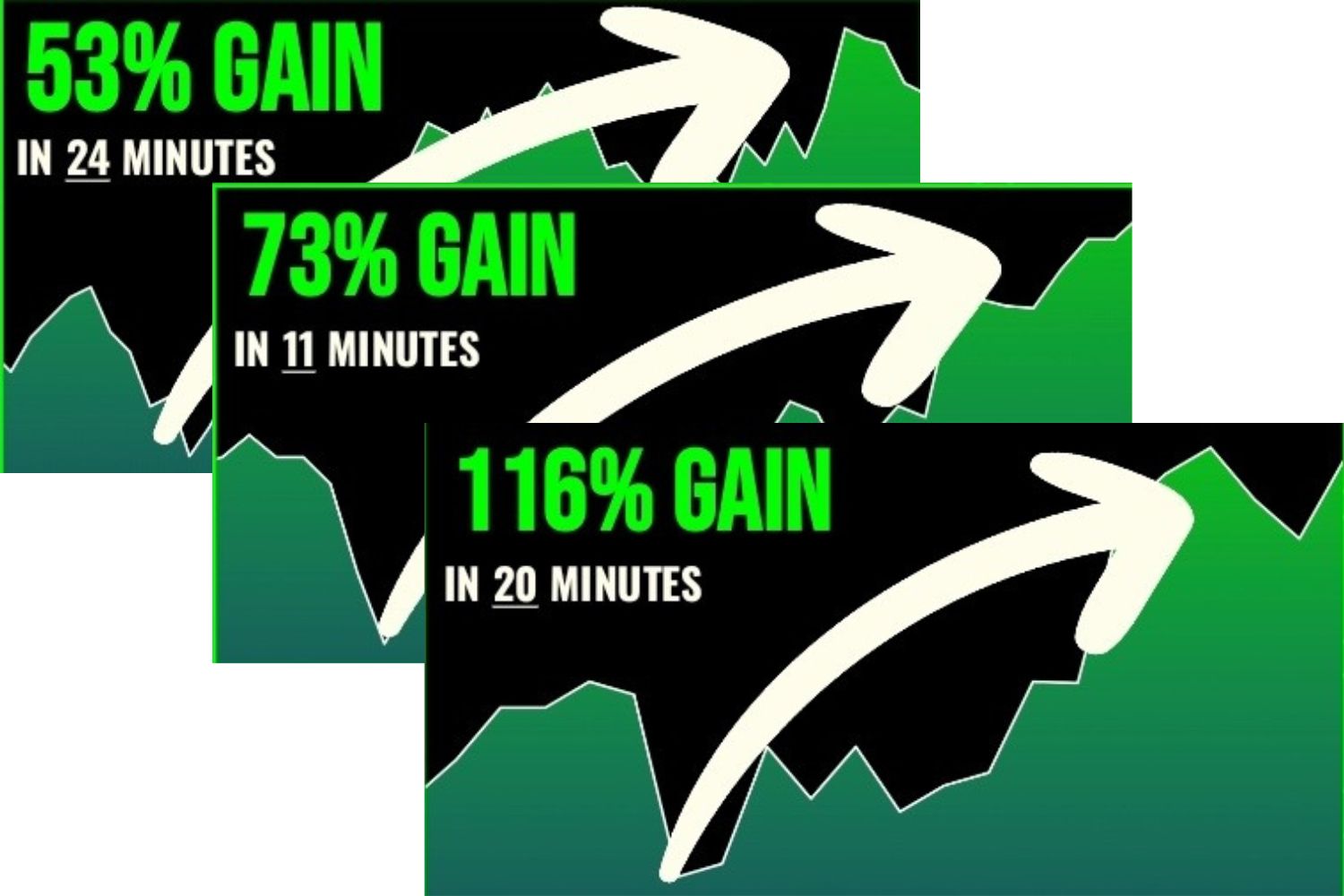
Granted, there were smaller wins and those that did not work out, but this isn’t a one-off occurrence. It’s what I’ve been seeing consistently for months.
The secret? Focusing on just three tickers at a time.
These options are so sensitive to price changes that even tiny moves can lead to significant gains.
And while I can’t promise future returns or against losses, I’ve put together a short rundown of how you can start using them to take advantage of these tiny shifts in the market.
Check This Out Before It’s Gone!
We develop tools and strategies to the best of our ability, but no one can guarantee the future. There is always a risk of loss when trading past performance is not indicative of future results. From 7/10/24 – 1/12/26 the result was a 74% win rate with an average hold time of less than 24 hours on the underlying stock.