🚨I’ll be live at 10 a.m. ET with Nate🚨
We’ll cover the bull and bear cases for where things currently stand, some monster earnings reports on deck, seasonals and more [tap to join us for Opening Playbook]!
There’s a disconnect forming in the data right now and it’s the kind of thing that makes me lean forward in my chair…
On one side, you’ve got real-time inflation metrics quietly cooling off. On the other, the market’s gone from expecting aggressive rate cuts at the start of the year to now pricing in up to three hikes through 2025. That’s a big shift and it’s built on assumptions that may not hold up.
One reason this matters is that alternative inflation gauges like the Truflation index, which tracks price changes in real time, have been trending steadily lower.
Sometimes these alternative measures catch turns in inflation dynamics earlier than the traditional Consumer Price Index (CPI) because they update faster and reflect shifts in consumer behavior as they happen. When they cool off, it often signals softening price pressures before the official data does — and that has clear implications for monetary policy and investment positioning.
Yet rate expectations keep rising. Historically, these two almost always converge, with inflation leading the way. If the pattern holds, the market may eventually pivot back toward the cooling data.
That’s the core of the bull case forming beneath the surface.
The Geopolitical Wild Card
All of this would be much cleaner if global tensions weren’t flaring up again. The renewed conflict involving Iran has already pushed energy prices higher and markets tend to react quickly whenever the Middle East heats up.
We’ve seen this before — spikes in crude during conflicts like the Gulf War or the 2019 Strait of Hormuz tensions triggered immediate volatility and introduced a risk premium across global markets.
Oil has surged and rising energy prices are one of the fastest ways to complicate an otherwise improving inflation picture. Central banks know this well. Anytime geopolitical risk drives commodity prices, they tend to adopt a wait-and-see stance even when domestic data gives them room to maneuver.
That’s why this conflict casts such a long shadow over the rate outlook.
Reading Market Signals and Positioning
Despite the noise, some market signals are surprisingly constructive. The VIX is still below 20, and a calm volatility environment often supports steady upward price action because traders are more willing to take on risk when the floor doesn’t feel like it’s shifting beneath them.
At the same time, price action across major indexes has been forming an ascending triangle — a pattern that usually suggests accumulation. It lines up well with what you’d expect in a market waiting for clarity on both the economy and geopolitical developments.
Earnings season only amplifies this dynamic because each report gives traders another data point as they manage risk and fine-tune positioning.
Put it all together and you get a market caught between cooling inflation, rising energy pressures and a cautious Fed. The next major move will likely come from whichever force breaks the stalemate first — the data or the headlines.
Graham Lindman
Graham Lindman Trading
Follow along and join the conversation for real-time analysis, trade ideas, market insights and more!
- Telegram:https://t.me/+abM5RWRJKrpkNWI5
- YouTube:https://www.youtube.com/@NewMoneyCrew
Important Note: No one from the ProsperityPub team or Graham Lindman Trading will ever contact you directly on Telegram.
*This is for informational and educational purposes only. There is inherent risk in trading, so trade at your own risk.
P.S. I Want to Help Cut Your Trading Down to 1 Hour a Day
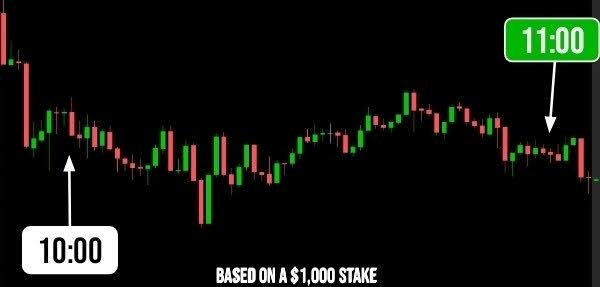
My powerful setup targets a brief 60-minute window that gives regular folks a shot at 50%+ returns…