🚨I’ll be live at with Alex at 2:30 p.m. ET🚨
[tap to join them for Profit Panel]
The new Fed Chair just got confirmed, and honestly, I don’t envy the guy one bit.
His name’s Kevin Warsh. And once you look at what he’s walking into, the name doesn’t matter nearly as much as the mess waiting for him.
Here’s the setup: Inflation metrics just smoked this week — both CPI and PPI came in hot. At the same time, interest rates are moving up.
And in the middle of all that, President Donald Trump is standing there demanding rate cuts.
Now, inflation and rising rates are serious problems, but this isn’t the 1970s. Back then nearly half of GDP was built on manufacturing.
Today the economy leans heavily on tech, services and innovation — from AI to hydrogen and clean energy.
Those structural differences mean any stagflation storyline is operating in a completely different world, with far more support beams holding things up.
So the core question becomes this: Can you cut rates with inflation going up and interest rates going up?
The answer’s no. You just can’t.
But that doesn’t mean the pressure isn’t real.
Why Trump Wants Cuts — and Why It Matters
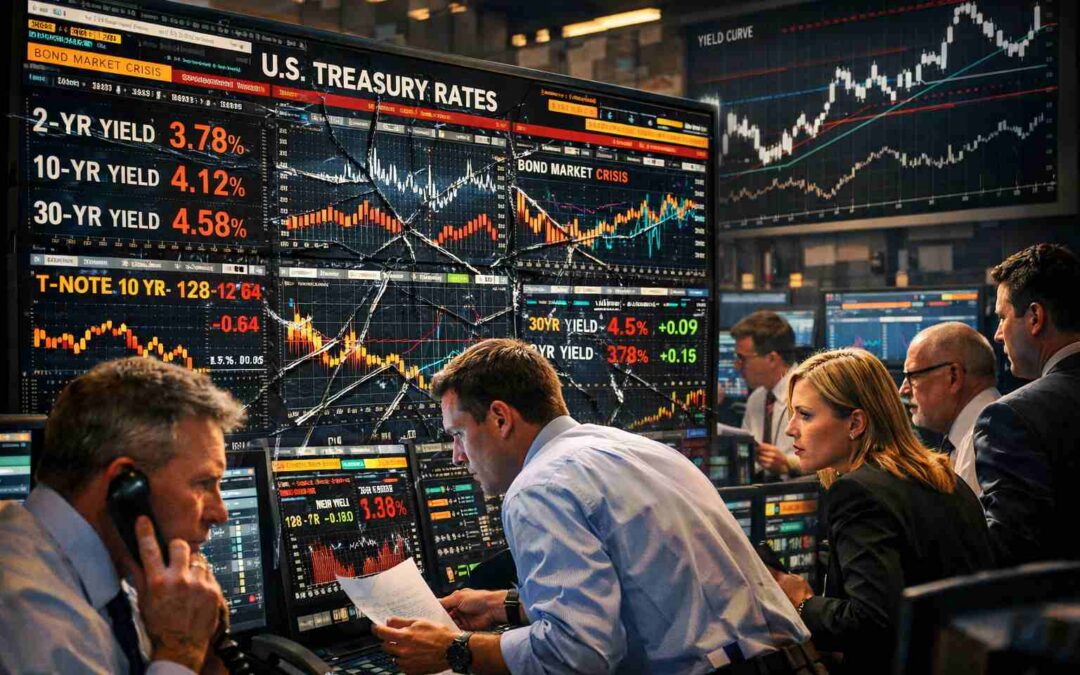
They just did a 30-year bond auction at 5.08% on $30 billion in bonds. Think about the interest the government has to pay on that. It’s massive.
And here’s the part no one talks about: A huge pile of debt taken out during the COVID years at ultra-low rates is rolling over.
Refinancing that debt at 5% instead of 1% or 2% blows up the math instantly.
So if rates can be knocked down to 1% or 2%, it becomes a whole lot easier — and far cheaper — to sell those bonds. That’s the real incentive behind the push for cuts.
But you can’t just slash rates because you want to. Not when the data says otherwise.
If Warsh comes in and starts raising rates instead, this market’s going to get hammered. Everyone knows it. That’s why traders are on edge, and why every whisper from the Fed moves markets by the minute.
At the same time, there’s a structural upward bias baked into markets no matter what the Fed says.
Retirement accounts, pensions and institutional funds keep shoving money into the major indices. That constant flow forces buying and keeps a floor under the market even during stretches of uncertainty.
And here’s the quiet part: When a company gets added to an index like the S&P 500 (SPY), funds have to buy its stock automatically. Your 401(k) ends up buying everything sitting in that index, even the stuff you’d never touch on purpose.
That alone props up a lot of prices.
What I Think Happens Next
Warsh a stellar business person — conservative, serious and firmly in the “I’d rather cut rates than raise rates” camp.
But he knows you can’t fire off cuts just because the administration wants them. Reality still matters.
I think he’ll approach this with a smart brain instead of a political one. At least, that’s the hope.
But make no mistake — the tension between political pressure and economic reality is about to define the entire market narrative.
And markets hate uncertainty, especially when the Fed’s at the center of it.
👉 Click here to join Profit Panel at 2:30 p.m. ET on weekdays!
Profit Panel equips traders to adapt to any market condition, by knowing when to trade aggressively and when to stand aside, live at 2:30 p.m. ET Monday-Friday.
Geof Smith
Geof Smith Trading
Follow along and join the conversation for real-time analysis, trade ideas, market insights and more!
- Telegram: https://t.me/+lm8_Nq3Su104NmFh
- YouTube: https://www.youtube.com/@FinancialWars
Important Note: No one from the ProsperityPub team or Geof Smith Trading will ever contact you directly on Telegram.
*This is for informational and educational purposes only. There is inherent risk in trading, so trade at your own risk.
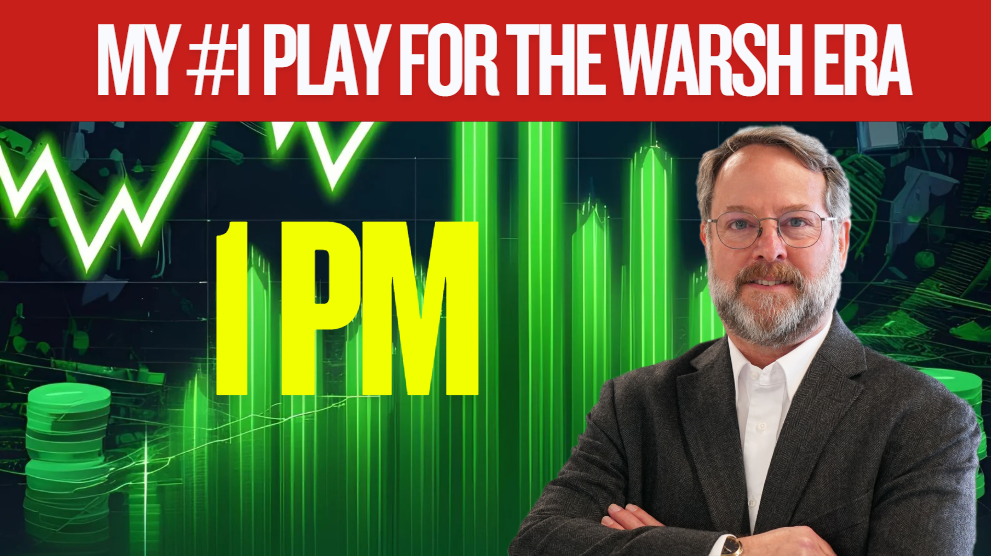
P.S. I’ll Reveal My Top Play for the Warsh Era on Zoom
This play is the same approach that has delivered a stunning perfect win streak on 20 close signals.
Join in at 1p.m. ET for the details.
Tap Here to Join the Zoom Room
Disclaimer: We develop tools and strategies to the best of our ability, but we can’t guarantee the future. There is always a risk of loss when trading. Past performance is not indicative of future results. Since LIVE trading began on 9/18/25, there have been 24 trades, with 20 winners and 4 still open, continuing the undefeated streak. In LIVE trading, the average return has been 32.03%, and the average hold time has been 17 days.