
🚨 I’ll be live at 2:30 p.m. ET with Alex Reid🚨
One glass company is strong as a gorilla, one retailer is heating up despite the cold, and yes — if you like eating at Chili’s, you’ll want to see this [tap to join us for Profit Panel]
Sometimes the best lessons about structure come from the small details most traders overlook.
United Parcel Service (UPS) trading near $117 offered one of those lessons recently.
Earnings had just come out near $116, and flow started picking up — roughly 13,000 contracts on the $100 puts around $7.50 to $8.00, and steady activity on the $110 calls.
Direction wasn’t the main story… structure was.
Building a spread in that environment wasn’t about picking a level. It was about what the market was willing to offer — and what it wasn’t.
Why Feb. 13 Mattered
If you wanted to keep risk tight, the Feb. 13 expiration was the only viable option. It offered $2.5-wide strikes, while later expirations jumped to $5-wide intervals.
That single detail completely changed the risk profile.
A narrower put spread allowed for a cleaner, smaller directional trade without tying up excess capital.
That week, a $90–$88 put spread could be built for roughly 52 to 53 cents on a $2-wide spread. That balance of risk and reward only works when structure and timing align.
Short-dated spreads demand quick movement. With only five days to expiration, there was no room for patience if the trade didn’t cooperate.
That matters even more in the current market environment. To push deep in-the-money or far-off strikes, you’d need a sell-off large enough to be remembered for years. Without that, the trade has to be built realistically.
Structure, Volatility and Risk Management
Implied volatility (IV) played a role as well. Rising IV makes options more expensive, which can help if you’re positioned early, but it also increases the risk of premium collapse.
Timing and structure must work together.
None of it matters without disciplined exits. Taking profits and reducing exposure is often the best form of risk management, especially with short-dated trades and narrow spreads.
That’s the real takeaway. The trade works when strike width, expiration, volatility and risk management align.
When structure comes first, the trade has a chance. When structure is forced, direction alone won’t save it.
👉 Click here to join Profit Panel at 2:30 p.m. ET on weekdays!
Geof Smith
Geof Smith Trading
Follow along and join the conversation for real-time analysis, trade ideas, market insights and more!
- Telegram: https://t.me/+lm8_Nq3Su104NmFh
- YouTube: https://www.youtube.com/@FinancialWars
Important Note: No one from the ProsperityPub team or Geof Smith Trading will ever contact you directly on Telegram.
*This is for informational and educational purposes only. There is inherent risk in trading, so trade at your own risk.
P.S. Don’t Let the Recent Gold Dip Fool You
I’m the one who nailed the Gold Supercycle call back in 2023…
And now I’m seeing the setup for a third mega catalyst that could make gold’s recent 150% run look like a drop in the bucket.
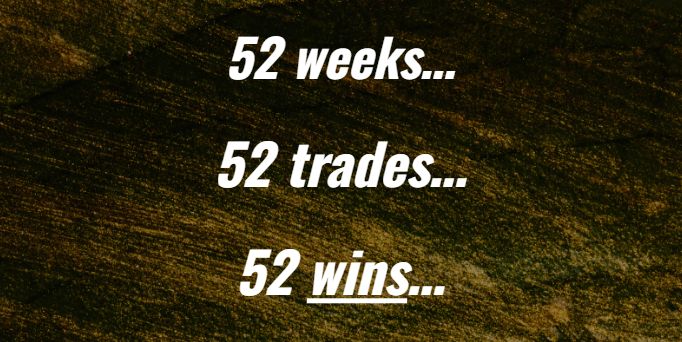
I will reveal the No. 1 trade to take advantage of the imminent run, the same one that delivered a perfect win rate last year.
Are you interested?
Disclaimer: We develop strategies to the best of our ability, but we cannot guarantee a future return. There is always a risk of loss when trading. Past performance is not indicative of future results. Since 12/05/2024, the trading approach discussed today has published 54 trade alerts. All 54 have returned as winning trades, for a 100% win rate. The average return per trade, winners and losers combined, has been 16.88% on an average holding period of 9 days.