🚨 I’ll be live at 10 a.m. ET with Nate Tucci🚨
We’ll cover the super bullish 12-month outlook, the quiet before the earnings storm, the line in the sand for the S&P 500 and more [tap to join us for Opening Playbook]!
Most traders choose between debit and credit spreads based on market direction or income preference. I’ve discovered there’s a much smarter way to make this decision — one that can save you hundreds of dollars in hidden fees and protect you from devastating early assignment.
My framework is simple: The main reason why I would use one spread over the other is based on the chances of being exercised. It’s not about bullish versus bearish. It’s about avoiding the fees most traders never see coming.
The Fee Trap That Quietly Eats Your Profits
When you run debit spreads with strikes deep in the money (ITM), your profit may look guaranteed, but the hidden costs can quietly erode your returns. Being exercised on a debit spread locks in your max profit, which sounds great — until the fees start hitting.
Early exercise triggers a stack of charges most traders never factor in. You get exercise fees, clearing time and margin fees — all sorts of little knick‑knacky fees.
Even the smallest ones add up. You’ll see regulation fees around 75 cents and some brokers charge $10 or $15 in interference fees when they step in to manage an assignment on your behalf.
The real pain comes from margin. I once woke up at 2 a.m. to find $7 million of S&P 500 (SPY) in my $200,000 account. That position sat there for only a couple hours, yet I still got hit with around $150 to $200 in margin fees.
It doesn’t matter how experienced you are — waking up to a multi‑million‑dollar position you never wanted is a shock.
It’s not unusual for the total cost of these fees to land between 75 cents and $30 per assignment. But if you’re trading a $500 gold spread and lose $30 to fees, that’s an immediate 10% hit to your profit.
Why give that away?
The Zero‑Fee Approach
This is where credit spreads shine, as long as the strikes are below the stock price. If the stock finishes above your strikes, you’ve made full profit with zero fees. The options expire worthless and simply disappear from your account. No exercises, no clearing costs, nothing draining your earnings.
Think of it like term life insurance — you collect the premium and hope nothing happens.
But when your strikes are at or above the current stock price, everything flips. A credit spread up there has a high chance of being exercised, and assignment on a credit spread is how you take a max loss. You don’t want that, especially not early.
Getting assigned on a Wednesday while your trade still has days left cuts off any chance of recovery.
That’s exactly why I switch to debit spreads at or above price. With a debit, early exercise helps you — it triggers your max profit instead of locking in a loss. Choosing the right structure for the position keeps you out of fee traps and protects your account from sudden, unwanted assignments.
The rule is simple: Use credit spreads below the stock price to avoid fees and switch to debit spreads above the price to avoid early exercise disasters. It’s not a directional strategy — it’s a profit‑preserving strategy.
Graham Lindman
Graham Lindman Trading
Follow along and join the conversation for real-time analysis, trade ideas, market insights and more!
- Telegram:https://t.me/+abM5RWRJKrpkNWI5
- YouTube:https://www.youtube.com/@NewMoneyCrew
Important Note: No one from the ProsperityPub team or Graham Lindman Trading will ever contact you directly on Telegram.
*This is for informational and educational purposes only. There is inherent risk in trading, so trade at your own risk.
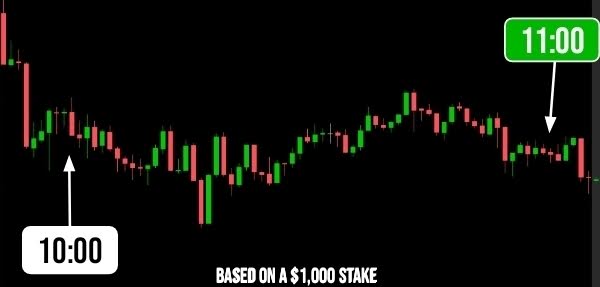
P.S. My No. 1 Daily setup and What Happens When You Hold Till the Close
I’ve been showing you how to target 50% a day in less than an hour every morning using my No. 1 daily setup.
However, if you hold the same trade until the close, that 50% target quickly transforms into what could be a 100% payout!